
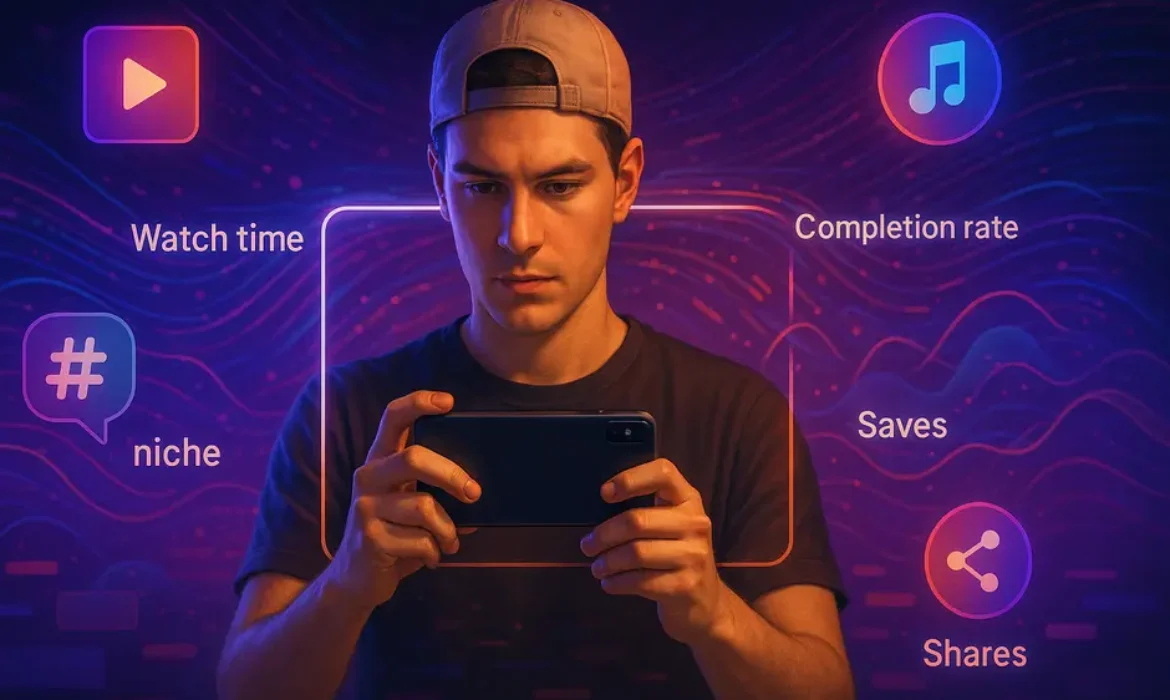
How to Go Viral on TikTok in 2026: A Data-Backed Strategy for Creators
Estimated reading time: 14 minutes
Why Going Viral on TikTok Is Still Achievable in 2026
Here is something most creators get wrong about TikTok: they treat virality like a lottery ticket. Post enough content, hope the algorithm smiles on you, and maybe one video takes off. That mindset worked in 2020 when TikTok was still a novelty and the competition was thin. In 2026, with over 1.9 billion monthly active users globally, you need something more deliberate.
The good news is that TikTok remains one of the few platforms where a creator with zero followers can reach millions of people on their first video. That is not marketing rhetoric. The For You Page (FYP) is structurally designed to surface content based on engagement signals rather than follower count. That levels the playing field in a way that Instagram’s feed or YouTube’s subscriber model simply does not.
What has changed is the sophistication required. The creators consistently trending on TikTok in 2026 are not lucky. They understand the algorithm deeply, craft videos with intention, and treat their content like a product that needs to perform. This guide breaks down exactly how they do it, backed by data and grounded in what actually works right now.
Understanding the TikTok Algorithm in 2026
The TikTok algorithm has never been publicly documented in full detail, but TikTok’s own transparency resources and third-party research give us a reliable picture of how content gets distributed.
At its core, the algorithm serves each video to a small test audience first. Think of it as a staged rollout. If that initial group engages with the video strongly, the system pushes it to progressively larger audiences. This cycle repeats until engagement drops below a threshold or the content saturates its relevant audience pool.
The signals TikTok uses to measure content quality fall into several categories:
| Signal Category | Specific Metrics | Weight |
|---|---|---|
| Engagement Quality | Likes, comments, shares, saves | High |
| Watch Behavior | Completion rate, rewatch rate, average watch time | Very High |
| Interaction Depth | Profile visits, follows triggered by the video | Medium-High |
| Content Information | Captions, sounds, hashtags, on-screen text | Medium |
| Device and Account Settings | Language preference, location, device type | Low-Medium |
The most important shift in the 2026 algorithm is the elevated weight given to saves and shares over passive likes. TikTok’s internal systems now treat a save as a stronger quality signal than a like because it suggests the viewer found the content genuinely valuable, not just momentarily entertaining. Shares, particularly off-platform shares, indicate content worth distributing to people outside the existing TikTok ecosystem.
Understanding this hierarchy changes how you should think about content creation. You are not just trying to entertain. You are trying to create videos people want to bookmark and send to their friends.
The Anatomy of a Viral TikTok Video
Before diving into individual tactics, it helps to understand what the best-performing TikTok videos have structurally in common. After analyzing hundreds of viral TikToks across niches ranging from finance to fitness, a consistent pattern emerges.
The pattern looks like this:
- 0–3 seconds: A hook that creates immediate curiosity or emotional tension
- 3–15 seconds: The setup or context that makes the viewer feel they need to keep watching
- 15–40 seconds: The substance, payoff, or story development
- Final 5 seconds: A call to action, cliffhanger, or punchline that encourages rewatching or sharing
This structure is not rigid, but deviation from it should be intentional. Some of the most viral content breaks the formula deliberately to create pattern interrupts. A finance creator who opens with a shocking statistic, a recipe creator who shows the finished dish in the first two seconds, a travel creator who starts mid-sentence mid-adventure. These all work because they are intentional breaks, not lazy structure.
Hook Strategy: The First 3 Seconds Determine Everything
Every conversation about TikTok viral strategy comes back to the hook, and for good reason. In a scroll-based environment, attention is the scarcest resource. Your first three seconds need to stop the scroll before the viewer even consciously decides to watch.
There are five hook frameworks that consistently outperform everything else:
1. The Curiosity Gap Hook
Open with a statement or question that creates an information gap the viewer cannot resist closing.
Example: “The reason most creators never hit 100k followers has nothing to do with their content.”
2. The Bold Claim Hook
Make a specific, counterintuitive, or surprising claim in the first line.
Example: “I gained 200k followers in 11 days without using trending sounds.”
3. The Visual Hook
Lead with a visually striking image, movement, or scene change before any dialogue begins. This works particularly well in food, travel, and transformation content.
4. The Direct Address Hook
Speak directly to a specific person or problem. Hyper-specificity makes this work.
Example: “If you’re a freelance designer struggling to get clients from TikTok, this is for you.”
5. The Conflict or Problem Hook
Open in the middle of a conflict, mistake, or relatable failure.
Example: “I just lost $4,000 on a brand deal. Here is exactly what happened.”
What kills hooks faster than anything else is a slow build. Starting with “Hey guys, welcome back to my channel” in 2026 is the fastest way to get scrolled past. No preamble. No introductions. Start in the action.
Watch Time and Completion Rate: The Metrics That Actually Matter
If you had to pick two metrics to obsess over, make it watch time and completion rate. The TikTok algorithm treats these as primary quality indicators, and the reasoning is sound: if people are watching your video all the way through, and watching it more than once, the content is clearly doing something right.
Completion rate is the percentage of viewers who watch your video from start to finish. A completion rate above 60% is considered strong on most content types. For shorter videos under 15 seconds, you should be aiming even higher because the bar for finishing them is lower.
Average watch time matters more as your videos get longer. A two-minute video with a 45-second average watch time is significantly outperforming a two-minute video with a 20-second average, even if both have similar like counts.
Practical ways to increase completion rate:
- Keep the first version of any new video under 30 seconds until you understand your audience’s patience threshold
- Use open loops, questions left unanswered early in the video that get resolved at the end
- Add on-screen text that complements but does not duplicate what you are saying verbally, giving viewers two reasons to stay
- End videos in ways that reward full viewing, a surprising twist, a useful summary, a callback to the opening
One underrated tactic is the rewatch loop. Structuring your video so the ending naturally leads back to the beginning encourages replays, which TikTok counts as additional watch time and treats as a strong quality signal.
TikTok Content Strategy: What Types of Content Spread
Not all content categories perform equally on TikTok, and not all viral content looks the same across niches. What goes viral in personal finance looks nothing like what goes viral in comedy, but both share an underlying engine: emotional resonance + shareability.
Here is how content that consistently earns organic reach breaks down across categories:
| Content Type | Why It Spreads | Best Niche Applications |
|---|---|---|
| Educational / How-To | People save and share practical value | Finance, health, tech, marketing |
| Transformation / Before-After | Visual proof drives curiosity and aspiration | Fitness, home decor, beauty |
| Storytelling / Personal narrative | Emotional connection drives completion | Lifestyle, career, mental health |
| Trend-based / Reactive content | Timeliness amplifies reach temporarily | Entertainment, news commentary, pop culture |
| Opinion / Hot take | Controversy drives comments and shares | Business, politics, relationships |
| Behind-the-scenes | Authenticity builds trust and loyalty | Entrepreneurship, creative fields |
The smartest TikTok content strategy in 2026 does not pick one of these formats and stick to it exclusively. It identifies the two or three formats that match your brand and audience, and rotates through them systematically. This prevents the content fatigue that causes even strong accounts to plateau.
Trending Sounds, Hashtags, and the FYP Formula
Trending Sounds
TikTok’s audio-first nature is one of its defining characteristics. Using a trending sound does not guarantee virality, but it gives your video a distribution advantage because TikTok’s discovery features surface videos around sounds, not just hashtags.
The key is using trending sounds at the right stage of their trend cycle. A sound that has already peaked and saturated the platform offers diminishing returns. The window where a trending sound offers maximum leverage is typically within the first 48 to 72 hours of its rise. Tools like TikTok’s Creative Center and third-party platforms track sound momentum in real time.
One important nuance: if your content is educational or informational, forcing a trending sound onto it often reduces quality. A finance tip delivered over an audio trend that does not match the mood can feel dissonant. In those cases, original audio or a clean voiceover will outperform trend-chasing.
Hashtag Strategy
The role of hashtags on TikTok is more nuanced than on Instagram. They are primarily a classification signal for the algorithm, not a primary discovery mechanism for users. Using extremely broad hashtags like #fyp or #foryoupage has been widely debunked as a ranking tactic. They provide no targeting signal because they categorize content as everything and nothing simultaneously.
A more effective approach:
- Use one or two niche-specific hashtags that accurately describe your content category
- Add one mid-tier hashtag that represents the broader topic area
- Include a trending hashtag only if your content genuinely fits the trend
- Avoid using more than five hashtags total, as this can dilute your signal
The FYP Formula
Getting onto the For You Page consistently comes down to engineering your content to win TikTok’s early distribution test. Make it easy for the algorithm to categorize your content quickly (clear niche, consistent tone), give the first audience segment strong reasons to engage deeply, and post when your target audience is most active.
Best Posting Times and Frequency
The question of when to post on TikTok gets more nuanced with every algorithm update, but the underlying principle remains consistent: post when your specific audience is most likely to be actively scrolling.
General data from multiple creator analytics studies suggests these windows perform well across most audiences:
| Day | Recommended Windows (Local Time) |
|---|---|
| Monday – Friday | 6:00 AM – 9:00 AM, 12:00 PM – 2:00 PM, 7:00 PM – 9:00 PM |
| Saturday | 9:00 AM – 11:00 AM, 7:00 PM – 9:00 PM |
| Sunday | 8:00 AM – 10:00 AM, 4:00 PM – 6:00 PM |
These are starting points, not absolutes. Your TikTok analytics dashboard will show you exactly when your followers are online, and for accounts with a substantial following, that data should override any general benchmark.
Posting frequency is a persistent debate. The answer in 2026 is this: consistency beats volume. Posting once daily with intentional, well-crafted content outperforms posting five times per day with mixed quality. TikTok’s algorithm does not penalize lower post frequency the way early guidance suggested. What it does penalize, in a practical sense, is low engagement. If you post six videos a week and four of them underperform, you are training the algorithm to expect weak results from your account.
A sustainable cadence for most creators is three to five videos per week with at least one piece of content per week specifically designed to capture new audiences, what practitioners call a reach post versus a retention post.
Using Duet and Stitch to Amplify Reach
Duet and Stitch are two of TikTok’s most underutilized organic growth features. Both allow you to create response content attached to other videos, which means your content gets exposed to the original video’s audience in addition to your own.
Stitch lets you clip and respond to another video. This works exceptionally well for educational content, commentary, and debunking. When you Stitch a video from a creator with a large following and add genuine value to the conversation, their audience has a direct reason to visit your profile.
Duet places your video side-by-side with another. It performs well in entertainment, music reaction, and challenge formats. The tactical play is to Duet trending content early in its cycle when the original video is still actively circulating.
The underappreciated benefit of both features is SEO-adjacent: your response video inherits some of the contextual relevance of the original, helping the algorithm categorize your content accurately.
One caveat: always add something meaningful. A Stitch or Duet that simply agrees with the original without adding insight or entertainment value rarely earns traction. The format works when your response is the reason someone watches the whole video.
TikTok for Business: Turning Virality Into Revenue
Going viral is only valuable if it serves a larger goal. For businesses and creator-entrepreneurs, virality without conversion strategy is just vanity metrics.
The most effective TikTok for business approaches in 2026 treat the platform as a top-of-funnel awareness engine that feeds a deliberate customer journey. Viral content brings people in. Your profile bio, link in bio, and content ecosystem convert them into customers, email subscribers, or followers on owned platforms.
Three conversion structures that work:
1. The Content Funnel Model
Viral reach post draws new viewers. Niche-specific content builds trust. Direct offer or CTA converts.
2. The Product Demonstration Model
Show the product or service in action without explicitly selling. Let the result do the persuasion. This is particularly effective for physical products, software tools, and service-based businesses.
3. The Personal Authority Model
Build a recognizable face and point of view. Use virality to establish expertise, then monetize through consulting, courses, or high-ticket services where trust is the primary buying signal.
Brands running paid TikTok campaigns alongside organic content in 2026 consistently report lower cost-per-click than equivalent Instagram or YouTube campaigns, largely because TikTok’s native ad formats (particularly TopView and In-Feed ads) blend into the organic experience more naturally than competing platforms.
TikTok Creator Rewards: What You Need to Know
TikTok replaced its original Creator Fund with the Creator Rewards Program, which launched in 2023 and has continued to evolve through 2025 and into 2026. The new model pays creators based on a more sophisticated set of metrics than the original fund, specifically rewarding qualified views, originality scores, and content that holds attention.
To qualify for the Creator Rewards Program, creators generally need:
- A minimum of 10,000 followers
- At least 100,000 video views in the past 30 days
- An account in good standing, with content meeting community guidelines
- Videos longer than one minute tend to qualify for higher RPM rates
The payout rates under Creator Rewards are substantially higher than the original Creator Fund, with some creators reporting RPMs (revenue per 1,000 qualified views) ranging from $0.40 to $1.00 or more depending on niche, content quality, and audience geography. Finance, business, and health content typically earn higher rates due to advertiser demand in those categories.
Creator Rewards should be viewed as supplemental income rather than a primary revenue strategy for most creators. Brand partnerships, affiliate marketing, and owned product sales remain more lucrative per unit of effort for accounts with meaningful followings.
Common Mistakes That Kill TikTok Growth
Even strong creators make these errors. Recognizing them early saves months of stalled growth.
Inconsistency in niche. The algorithm needs to classify your account. If you post fitness content one week, cooking content the next, and travel content after that, TikTok cannot build an accurate audience profile for your account. Pick a lane and own it for at least 90 days before expanding.
Ignoring the first comment. Replying to the first comment quickly after posting boosts early engagement signals and keeps the algorithm’s distribution clock running in your favor.
Over-editing to the point of inauthenticity. Heavy transitions, fast-cut editing, and music overlays have their place, but overuse signals low-confidence content. Some of the highest-performing TikToks in 2026 are single-shot, minimal editing, high-substance videos.
Deleting underperforming videos. Many creators delete videos that do not perform immediately. This is almost always a mistake. Videos on TikTok do not follow a linear distribution curve. A video can sit dormant for weeks and then surface in a new audience segment. Deleting removes that possibility entirely.
Chasing trends at the expense of brand. Trend participation is useful. Trend dependence is a trap. If every piece of content you produce is reactive to what is already trending, you never build a distinctive voice that makes your account worth following specifically.
Key Takeaways
-
- The TikTok algorithm in 2026 prioritizes saves, shares, completion rate, and rewatch rate above all other engagement signals
- Your first three seconds determine whether anyone watches the rest. Build hooks with intention, not improvisation
- Watch time and completion rate are the two most important metrics for triggering wider distribution
- Hashtags serve as classification signals, not discovery mechanisms. Use three to five niche-relevant tags rather than chasing broad viral hashtags
- Trending sounds offer a distribution advantage but should only be used when they match the tone and content of your video
- Consistency in niche, posting frequency, and content quality matters more than volume
- Duet and Stitch features provide access to established audiences and should be part of every growth-oriented creator’s toolkit
- Virality without a conversion strategy creates noise, not business results
- TikTok Creator Rewards rewards originality and long-form attention retention more than it rewards short-form clip volume
FAQs
1. How long does it take to go viral on TikTok?
There is no fixed timeline. Some accounts go viral on their first video. Others build steadily for months before a single video breaks through to a large audience. What the data consistently shows is that accounts which post regularly with strong hooks and clear niche focus tend to have their first viral moment within the first 60 to 90 days. The creators who quit before that window closes are the ones who never find out how close they were.
2. Does posting every day help you go viral faster?
Frequency helps in the sense that more posts mean more opportunities for the algorithm to find a piece of content that resonates with a new audience segment. However, posting every day at the expense of quality consistently underperforms posting three to four times per week with genuinely strong content. Quality of individual videos matters more than raw posting volume for triggering the FYP distribution cycle.
3. How important are hashtags for getting on the For You Page?
Less important than most creators believe. Hashtags help TikTok’s system classify your content, which improves the accuracy of who your video gets shown to. But they do not directly boost distribution the way some creators assume. The algorithm’s primary trust signals come from watch behavior, not hashtag usage. Three to five accurate, niche-relevant hashtags are sufficient. Filling captions with dozens of hashtags is counterproductive.
4. Can small accounts go viral on TikTok in 2026?
Yes, and this is one of the platform’s genuine structural advantages over competitors. The FYP distributes content based on engagement quality, not follower count. A brand-new account with zero followers can reach hundreds of thousands of viewers if the first test audience engages strongly. Follower count matters for credibility and monetization thresholds, but it has minimal impact on how far any individual video can travel.
5. What is the best video length for going viral on TikTok?
It depends on the content type. For entertainment and trend-based content, videos between 7 and 30 seconds tend to achieve higher completion rates, which signals quality to the algorithm. For educational or storytelling content, videos between 60 and 180 seconds can outperform if the hook is strong enough to keep viewers watching. The Creator Rewards Program also incentivizes videos over 60 seconds with higher payout rates, which has nudged many creators toward longer formats in recent years. The honest answer is to test both formats within your niche and let your analytics show you where the engagement threshold lies.
6. Do TikTok lives help with video reach and virality?
Going live does not directly boost the reach of your pre-recorded videos. However, regular live sessions build audience loyalty, increase the time your followers spend engaging with your account, and can trigger the algorithm to classify your account as active and high-engagement. Creators who combine consistent video posting with weekly live sessions typically see faster follower retention and profile visit rates, which indirectly supports better video distribution.
7. Is TikTok worth investing in for business growth in 2026?
For most consumer-facing businesses and personal brands, yes. TikTok’s organic reach is still meaningfully higher than most social platforms at equivalent follower counts. The platform’s ad ecosystem has matured significantly, with targeting capabilities and creative formats that rival Meta’s advertising tools for certain demographics, particularly users between 18 and 35. The investment case is strongest for businesses that can tell a visual story, demonstrate a product in action, or build trust through a recognizable human presence. Purely transactional or B2B businesses with older target demographics may find better ROI elsewhere, but even in those cases, TikTok can serve a powerful brand awareness function.
Conclusion
Going viral on TikTok in 2026 is not about luck, and it is not about hacking the algorithm with trending sounds or aggressive posting schedules. It is about understanding how attention works in a scroll-first environment and building content that earns that attention at every stage of the viewing experience.
The creators who consistently trend on TikTok are students of their own analytics. They know which hooks made people stop, which video lengths kept people watching, which topics earned saves, and which calls to action drove profile visits. They treat every video as both a product and a data point.
Start with one niche. Build one hook formula that works. Master your first three seconds. Then layer in sounds, timing, and trend participation once the foundation is solid. Virality is a byproduct of that discipline, not a substitute for it.
The platform will keep evolving. The algorithm will keep shifting. But the fundamental principle, that the content people genuinely want to watch and share will always find its audience, is not going anywhere.
For additional insights into content strategy and platform algorithm behavior, explore resources from TikTok’s Newsroom and TikTok’s Creative Center for real-time trend data.