How to Get Brand Deals on YouTube: What Sponsors Actually Look For
Estimated reading time: 15 minutes
Introduction
Most YouTube creators chase subscribers like it is the only metric that matters. They grind toward 10,000, then 100,000, refreshing their analytics dashboard while assuming brand deals will eventually find them. Some do. Most do not — at least not the good ones.
The reality of how to get brand deals on YouTube is more nuanced than follower milestones suggest. Brands are not buying your subscriber count. They are buying access to a specific audience, confidence in your ability to convert, and assurance that working with you will not become a compliance headache. A creator with 8,000 engaged subscribers in the personal finance niche can land a more valuable sponsorship than a lifestyle channel sitting at 400,000 passive viewers.
This guide pulls back the curtain on what brand managers, marketing agencies, and in-house sponsorship teams actually look at when they evaluate a creator. If you want to attract sponsors consistently, command higher rates, and build long-term brand partnerships rather than one-off deals, understanding their decision-making process is the most important thing you can do.
1. Why Brand Deals on YouTube Are Worth Pursuing Seriously
YouTube sponsorships represent one of the most scalable revenue streams available to creators, and unlike ad revenue, they do not fluctuate with CPM seasonality or YouTube’s algorithm changes. When your AdSense revenue drops 40% in January — as it routinely does for most channels — a brand deal pays the same rate you negotiated three months ago.
Beyond income stability, brand partnerships validate your channel as a professional media property. That perception has a compounding effect. Once one credible brand works with you, their logo becomes social proof that accelerates conversations with the next sponsor.
According to Statista, global influencer marketing spending reached approximately $21 billion in 2023 and continues to grow. A significant portion of that budget flows to YouTube because the platform offers something no other channel reliably delivers: long-form, high-intent viewing behavior paired with a searchable archive. A sponsored video you publish today can generate impressions for years, which smart brand managers understand and price accordingly.
The opportunity is real. The competition for that opportunity is also real. That is why showing up prepared matters.
2. What Sponsors Are Actually Evaluating
Walk into any brand’s marketing team meeting and you will notice the conversation rarely starts with “how many subscribers does this person have?” It starts with: “Who is their audience, and does it match ours?”
Here is how most brand deal evaluations actually unfold:
Audience Fit
Before anything else, a brand checks whether your viewers resemble their target customer. A software company selling project management tools to small business owners has no use for a gaming channel with a predominantly 14-year-old audience, regardless of view count. Audience demographics — age range, gender split, geographic concentration, household income proxies — are the first filter.
Content Relevance and Brand Safety
Brands scan your recent uploads, read comment sections, and sometimes go back 18–24 months in your archive looking for anything that could create controversy. Brand safety has become an increasingly serious concern since YouTube’s adpocalypse era, and larger companies often run channels through third-party brand safety tools before approving any partnership.
This is not about being vanilla. It is about being consistent and predictable. Brands want to know what they are getting every time, not wonder whether your next video will put their logo in an uncomfortable context.
Engagement Quality
Raw views impress nobody in a sponsorship conversation. What brand managers want is evidence that your audience actually pays attention. Comments that reflect real comprehension of your content, high click-through rates on previous affiliate links, and strong watch time retention tell a story about an audience that listens — and an audience that listens is an audience that buys.
Creator Professionalism
This factor gets underestimated constantly. How you respond to an initial inquiry, how quickly you send your media kit, how clearly you communicate your deliverables, and how thoughtfully you follow up after a deal concludes all factor into a brand’s decision to work with you again and recommend you to their network.
3. The Numbers That Matter More Than Subscriber Count
Let us be direct: subscriber count is a vanity metric in most sponsorship conversations. It is not irrelevant — it sets a broad ceiling for your potential reach — but experienced brand managers know better than to stop there.
Here are the metrics that carry real weight:
| Metric | Why Brands Care | Benchmark to Aim For |
|---|---|---|
| Engagement Rate | Measures active vs. passive audience | 3–7% is healthy for most niches |
| Average View Duration | Indicates content quality and audience attention | 40%+ of video length is strong |
| Click-Through Rate (CTR) on End Screens | Proxy for conversion potential | 2–5% is above average |
| CPM / RPM | Signals audience purchase intent | Higher CPM niches = premium audience |
| Views Per Video (30-day average) | More reliable than total channel views | Consistency matters more than peaks |
| Audience Demographics | Confirms fit with brand’s target customer | Match to brand’s core demographic |
| Comment Sentiment | Reveals trust and community depth | Authentic, specific comments are gold |
A note on engagement rate: There is no universal formula that works across every niche. A tech review channel with 2% engagement among verified professionals is more valuable to a B2B software company than a lifestyle channel with 9% engagement from teenagers. Context always wins.
CPM as an audience quality signal: Your CPM on AdSense revenue is not just income — it is a signal you can share with brands to demonstrate audience purchase intent. Channels in finance, business, software, and health typically command CPMs of $15–$40, while entertainment and gaming channels often see $2–$8. Higher CPMs indicate YouTube’s advertising system has identified your viewers as high-value consumers, which is relevant information for a sponsor.
4. How to Build a Media Kit That Gets Responses
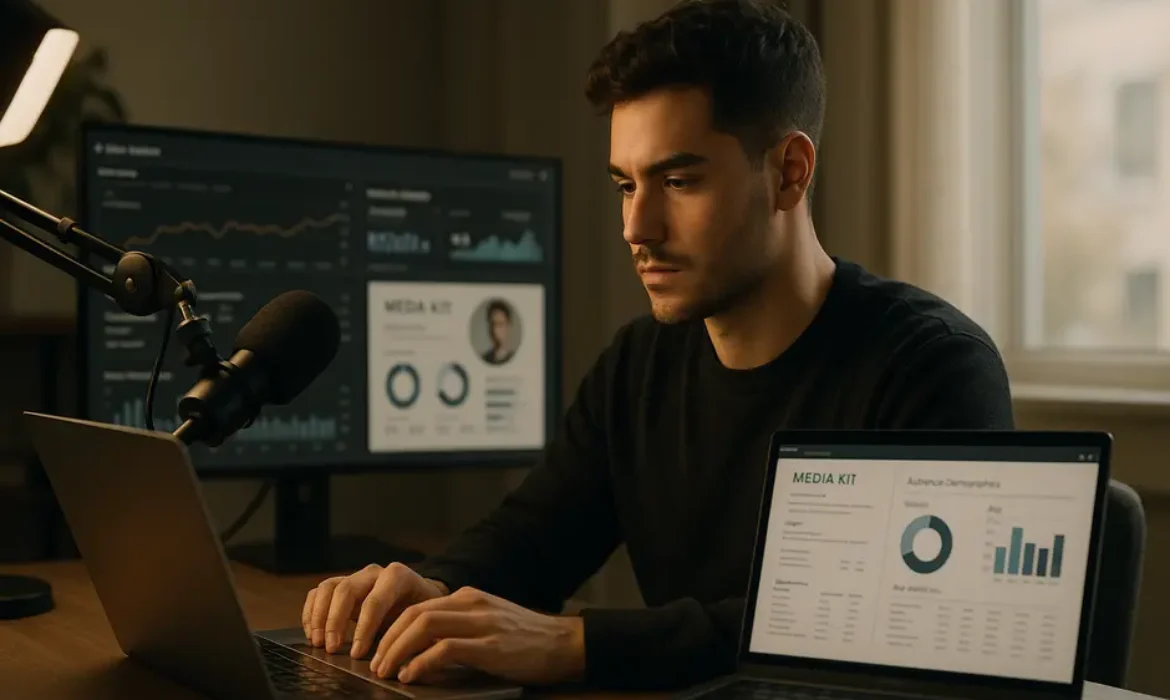
Your media kit is your professional handshake. It is the document that answers every question a brand manager has before they even ask it, and it signals that you take partnerships seriously.
A weak media kit is a wall of screenshots from YouTube Studio. A strong media kit tells a story about who you are, who watches you, and what working with you actually delivers.
What to Include in Your Creator Media Kit
Channel Overview (1 page maximum)
Lead with a clear, single-sentence description of your channel and your audience. Avoid adjectives like “passionate” or “dedicated” — describe concretely what you make and for whom. Example: “A weekly channel covering personal finance strategy for first-generation wealth builders between 25 and 40.”
Audience Demographics
Pull screenshots directly from YouTube Studio showing age breakdown, gender split, top geographies, and device type. If your audience skews heavily toward a high-income bracket or a professional category, make that obvious.
Engagement Metrics
Include average views per video over the past 90 days, average watch time percentage, subscriber growth trend, and any documented conversion results from past affiliate partnerships. Real conversion data is worth more than any other metric you can include.
Previous Brand Partnerships
If you have worked with recognizable names, list them with a brief note on the deliverable type (dedicated video, mid-roll integration, affiliate partnership). If you are starting from scratch, leave this section out rather than padding it with vague references.
Content Samples
Link to two or three recent videos that represent your best work. Make these easy to find — a brand manager is not going to search your channel.
Sponsorship Packages and Rates
Some creators prefer not to include rates in their media kit, keeping them flexible for negotiation. Others include tiered packages to filter out low-budget inquiries quickly. Both approaches are valid. The key is clarity.
Contact Information
A professional email address. Not a Gmail account from 2009. A branded address tied to your domain signals seriousness.
Tools like Canva, Adobe Express, or even a well-designed Google Slides presentation can produce clean, professional media kits without requiring design expertise. The visual quality of your media kit communicates something about your production standards as a creator.
5. How to Pitch Brands on YouTube the Right Way
Waiting for brands to discover you is a strategy, but it is a slow one. Proactive outreach accelerates everything, provided you do it correctly.
Research Before You Write a Single Word
Before contacting any company, understand their current marketing activity. Are they already sponsoring YouTube creators? What category? Are they running YouTube ads? What messaging themes keep appearing in their campaigns? This intelligence shapes your pitch from generic to genuinely relevant.
LinkedIn is your best tool here. Search for titles like “Influencer Marketing Manager,” “Brand Partnerships,” “Creator Marketing Lead,” or “Affiliate Manager.” These are the people whose job it is to evaluate creator partnerships, and reaching them directly bypasses the generic sponsorship inquiry inbox entirely.
The Anatomy of an Effective Pitch Email
Keep it short. Brand managers receive dozens of pitches weekly. Your goal is to create enough interest for them to open your media kit, not to close the deal in one email.
A strong pitch structure looks like this:
- Subject line: Something specific and value-forward. “YouTube Partnership Idea — [Channel Name] + [Brand Name]” works. “Collaboration Opportunity” does not
- Opening: One sentence establishing relevance. Reference their product, a recent campaign, or a specific reason their brand fits your audience. This demonstrates you actually did your homework
- Your audience in two sentences: Who watches you, what they care about, and why that overlaps with the brand’s customer profile
- Your value proposition in one sentence: What you are offering and why it is worth their attention. Keep this concrete
- Call to action: Invite them to review your media kit with a direct link and suggest a brief call. Give them an easy next step
What Not to Do
Do not begin your pitch by talking about how long you have been a fan of the brand. Do not lead with subscriber count as your primary credential. Do not use phrases like “I think we could do great things together” without specifics. And never, under any circumstances, offer to create content for free in exchange for product exposure — it devalues your work and signals inexperience.
6. Types of Sponsored Integrations and What Brands Prefer
Understanding integration types helps you structure your sponsorship packages intelligently and gives you language to use in brand conversations.
Dedicated Sponsored Video
The entire video is built around the brand’s product or service. These command the highest rates because every viewer impression is brand-relevant. They are also harder to sell because brands need significant confidence in your ability to make promotional content watchable.
Mid-Roll Integration
A 60–90 second segment placed at a natural break point in the video, typically between the 30% and 60% mark where audience retention is highest. Mid-rolls are the most common YouTube sponsorship format because they balance brand exposure with content integrity.
Pre-Roll Mention
A brief brand mention within the first 30–60 seconds before the main content begins. These are lower-cost integrations that work well for brand awareness campaigns but typically generate lower conversion rates.
Product Integration / Organic Mention
The product appears naturally within the content without a formal ad break. A productivity channel using a sponsor’s software tool on screen is a natural integration. These feel the most authentic to viewers and can generate strong conversion results, but they require genuine relevance to the content.
Affiliate Partnership
Rather than a flat fee, or in addition to one, the creator earns a commission on sales driven through a unique tracking link or promo code. These arrangements favor creators with highly engaged, purchase-intent audiences. Affiliate partnerships often evolve into longer-term relationships because the brand gets ongoing performance data.
| Integration Type | Best For | Typical Length | Pricing Basis |
|---|---|---|---|
| Dedicated Video | Product launches, high-ticket items | Full video | Flat fee (premium) |
| Mid-Roll | Brand awareness + conversion | 60–90 seconds | Flat fee |
| Pre-Roll | Brand awareness, remarketing | 15–30 seconds | Flat fee (lower) |
| Organic Mention | Trust-based categories (health, finance) | 10–30 seconds | Flat fee or affiliate |
| Affiliate Link | Ongoing conversion tracking | Ongoing | Commission-based |
7. Where to Find Brand Partnership Opportunities
Creator Marketplaces and Platforms
Several platforms exist specifically to connect brands with YouTube creators. These include:
- Grapevine — focused on YouTube, with a campaign-based matching system
- AspireIQ — used by larger brands, covers YouTube and cross-platform campaigns
- Collective Voice — strong for lifestyle and fashion niches
- YouTube’s own BrandConnect — YouTube’s native creator-brand matching platform for eligible channels
These platforms reduce the friction of cold outreach, though they typically involve lower rates and less negotiation flexibility than direct deals.
Direct Outreach
As covered earlier, LinkedIn-based research combined with a targeted email pitch remains the highest-upside approach for creators who want premium partnerships. The conversion rate is lower, but the deal quality when it works is significantly higher.
Your Existing Affiliate Relationships
Companies whose affiliate programs you already participate in already know you, already have data on your conversion performance, and have a financial incentive to deepen the relationship. If you have been driving consistent affiliate sales for a brand, email their partnership team directly and reference your performance data. This is one of the most overlooked paths to paid brand deals.
Inbound Interest
As your channel grows and your SEO-optimized videos accumulate views, inbound interest will begin arriving. Having a “Work With Me” page on your website or a clearly labeled sponsorship inquiry email in your YouTube About section captures this interest efficiently. Make it easy for brands to find you.
8. FTC Disclosure Rules You Cannot Ignore
This is not a minor detail. The Federal Trade Commission’s endorsement guidelines require creators to clearly disclose any material connection to a brand — including payment, free products, or affiliate relationships — in a manner that is impossible to miss.
On YouTube, proper disclosure means stating verbally at the beginning of a sponsored segment that the content is sponsored, and including a written disclosure in the video itself (on-screen text or a card) as well as in the video description. Hiding a sponsorship disclosure in the seventh line of your description, below the fold, does not meet the FTC’s standard of conspicuousness.
The risks of non-disclosure extend beyond FTC penalties. If a brand is cited for a disclosure violation connected to a creator’s video, the damage to that business relationship — and your reputation as a professional creator — is difficult to repair.
Keep it simple. Say “this section is sponsored by [Brand]” on camera before you begin the integration. Include “#ad” or “#sponsored” visibly in your description above the fold. Brands that ask you to skip disclosure are brands worth avoiding entirely.
Key Takeaways
-
- Subscriber count is a secondary metric. Audience demographics, engagement rate, and content relevance drive sponsorship decisions
- A professional media kit that tells a clear audience story is the single most practical tool you can build today
- Proactive outreach with a personalized, research-backed pitch consistently outperforms waiting for inbound interest
- Understanding integration types — mid-roll, dedicated video, organic mention, affiliate — lets you structure packages that work for both you and the brand
- Engagement quality matters more than volume. An audience that responds, clicks, and converts is more valuable than one that scrolls past
- FTC disclosure is non-negotiable. Proper disclosure protects you legally and builds long-term audience trust
- Long-term brand relationships are worth more than individual deals. Treat every partnership as the beginning of an ongoing business relationship
FAQs
Q1: How many subscribers do you need to get brand deals on YouTube?
There is no hard threshold, but most direct brand deal conversations become realistic around 5,000–10,000 subscribers in a focused niche. Channels in high-CPM niches like finance, technology, business, or health can attract paid partnerships even earlier if their engagement metrics are strong and their audience demographics align clearly with a brand’s customer profile. Micro-influencer marketing has grown significantly because brands have discovered that smaller, more targeted audiences often outperform larger, diffuse ones on conversion metrics.
Q2: How much should I charge for a YouTube sponsorship?
Rates vary widely by niche, audience demographics, integration type, and deliverables. A commonly referenced starting point is $20–$50 per 1,000 views for a mid-roll integration, though creators in premium niches with strong conversion track records regularly charge $75–$150 per 1,000 views. The more concrete data you have on past performance — affiliate conversion rates, click-through rates on previous sponsor links — the stronger your position in rate negotiations. Never anchor your pricing solely on subscriber count.
Q3: What should I include in a brand pitch email?
Your pitch should establish audience relevance immediately, keep the total word count under 200 words, and direct the brand to your media kit for detail. The email’s only job is to create enough curiosity to prompt them to open the media kit and respond. Personalization is critical — reference something specific about the brand, their recent campaign, or their product that connects to your audience in a way that is not generic.
Q4: What is the difference between an affiliate deal and a paid sponsorship?
A paid sponsorship involves a flat fee in exchange for specific deliverables — a mid-roll integration, a dedicated video, a product mention — regardless of how many conversions result. An affiliate deal compensates the creator through commission on tracked sales, with no guaranteed income. Hybrid arrangements, which include a smaller flat fee plus affiliate commission, are increasingly common and align the interests of both parties effectively.
Q5: Do I need a media kit to get brand deals?
Technically, no. In practice, not having one significantly reduces your close rate on outbound pitches and makes you appear less professional in inbound conversations. A media kit does not need to be elaborate. A clean, well-organized two to three page document that clearly communicates your audience, your metrics, and your deliverables is enough to separate you from the majority of creators who pitch without one.
Q6: How do I find the right contact person at a brand?
LinkedIn is the most reliable tool. Search for job titles including “Influencer Marketing Manager,” “Creator Partnerships,” “Affiliate Manager,” or “Social Media Marketing Manager” at your target company. Email finder tools like Hunter.io can help you identify direct email addresses once you know the name. YouTube’s BrandConnect platform also handles the contact problem by acting as an intermediary for eligible channels.
Q7: Can I negotiate brand deal terms, and if so, what is negotiable?
Everything in a brand deal is negotiable to some degree. Rate is the most obvious lever, but usage rights, exclusivity clauses, revision requests, turnaround timelines, and deliverable scope all carry weight. Pay particular attention to usage rights — if a brand wants to repurpose your sponsored content in their own paid advertising campaigns, that should be priced separately from the original integration fee. Exclusivity clauses that prevent you from working with competitors for extended periods should either be limited in duration or compensated with a meaningful premium.
Conclusion
Getting brand deals on YouTube is not a lottery system that rewards the lucky or the most subscribed. It is a business development process that rewards creators who understand what brands need, present themselves professionally, and approach partnerships with the same seriousness they bring to their content.
The creators who land consistent, well-paid sponsorships are not necessarily the ones with the biggest channels. They are the ones who have built an audience with documented characteristics, made that audience data accessible through a clear media kit, and learned how to communicate value in terms that a marketing team actually uses.
Start by auditing your own channel metrics through the lens of a brand manager. Ask yourself honestly whether the data tells a compelling story about your audience. Build your media kit. Identify five to ten brands whose customer profile genuinely matches your viewers. Write personalized pitches. Follow up. Treat every conversation as a long-term relationship in progress.
The brands worth working with are looking for creators worth working with. Become that creator systematically, and the deals follow.
All external links referenced in this article point to authoritative, publicly accessible sources for verification purposes.