
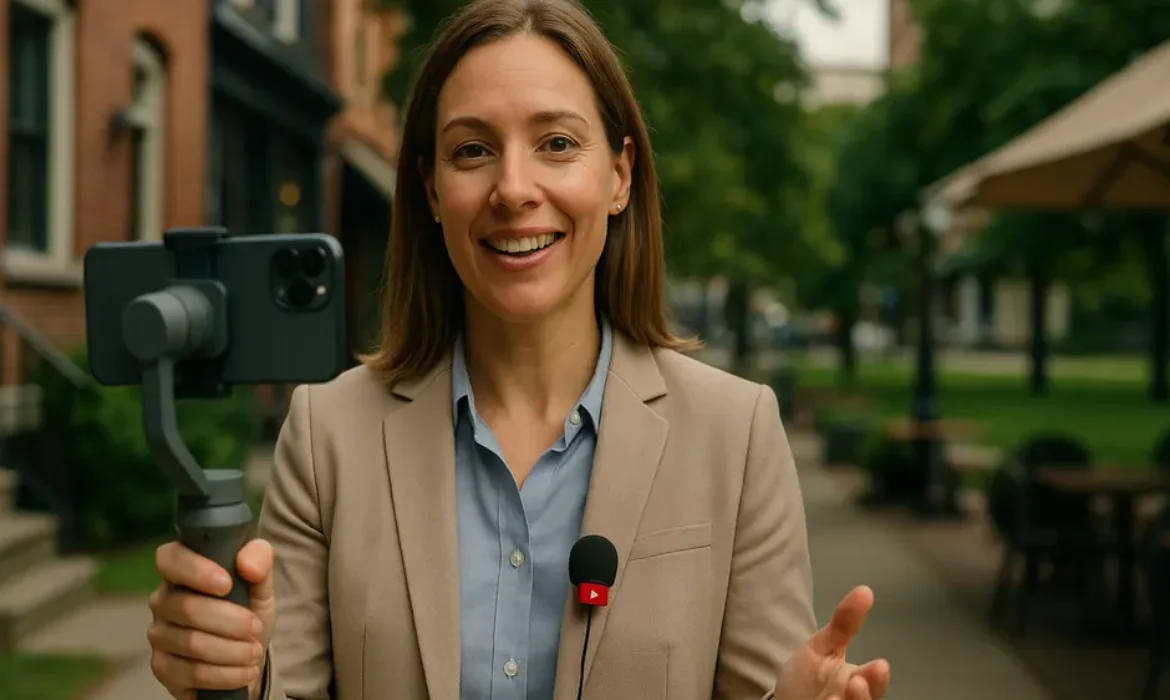
How Real Estate Agents Can Use YouTube to Generate Leads in 2026
Estimated reading time: 14 minutes
Why YouTube Is the Most Underutilized Lead Machine in Real Estate
Most real estate agents are pouring money into Facebook ads, cold calling, and overpriced lead platforms. Meanwhile, a growing number of quietly successful agents are building channels on YouTube that generate warm, pre-sold leads every single month — without a paid advertising budget.
Here is the reality: YouTube is the second-largest search engine in the world, processing more than 3 billion searches per month. It is also a Google property, which means content you publish there enjoys a privileged relationship with Google Search results. When someone types “best neighbourhoods in [your city]” into Google, there is a significant chance a YouTube video appears before any website link. If that video is yours, the person clicking it already trusts you before you say a single word.
For real estate, this dynamic is almost unfair in your favour.
Buyers spend months researching before they ever contact an agent. They are watching neighbourhood tours, asking about school districts, comparing property prices, and trying to understand mortgage processes. If your channel answers those questions consistently and clearly, you become the obvious agent to call when they are ready to move.
Sellers behave differently, but the psychology is similar. They want to work with someone who clearly knows their local market. A library of confident, data-driven market update videos signals expertise far more convincingly than a glossy postcard in their mailbox.
This guide is built specifically for 2026, where short attention spans, AI-generated content noise, and increasingly sophisticated buyers mean that generic real estate content simply does not cut through anymore. What works now is specific, local, human, and genuinely helpful.
Setting Up Your Real Estate YouTube Channel the Right Way
Before you shoot a single video, spend time building a channel that looks and functions like a professional media operation — because that is exactly what it is.
Channel Name and Branding
Your channel name should include your name or team name alongside your city or region. Something like “Sarah Chen — Toronto Real Estate” works better than a clever phrase nobody is searching for. Clarity beats cleverness on YouTube, especially for local search.
Your banner and profile photo should be consistent with your Google Business Profile and website. Buyers and sellers often research across multiple platforms before making contact. Inconsistent branding creates friction and erodes trust.
Channel Description
Write a channel description that reads naturally and includes your primary city, the type of client you serve, and what kinds of videos they can expect. This is indexed by both YouTube and Google. Mention your service areas explicitly, as this content feeds into your broader local SEO footprint.
Channel Sections and Playlists
Organise your content into playlists from day one. Suggested playlists for most real estate agents include:
| Playlist Name | Purpose |
|---|---|
| Neighbourhood Tours | Hyper-local content for buyers researching areas |
| Market Update Videos | Monthly insights to attract sellers and establish authority |
| Listing Walkthroughs | Property showcase videos with lead capture built in |
| Buyer’s Guide | Educational content for first-time buyers |
| Mortgage and Finance | Explainer videos addressing mortgage calculator questions |
| Local Business and Lifestyle | Community content that builds relatability |
Structured playlists keep visitors on your channel longer, which improves watch time — a critical ranking signal on YouTube.
Linking Your Digital Ecosystem
Connect your YouTube channel to your Google Business Profile, your website, and your email list signup page. In your channel settings, add your website URL and any relevant social links. YouTube allows you to verify your website, which unlocks additional features and strengthens the connection between your video content and your broader online authority.
The Content Types That Actually Generate Real Estate Leads
Not all video content is created equal. Some formats are entertaining but functionally useless for lead generation. Others look boring on the surface but consistently drive qualified inquiries from motivated buyers and sellers.
Based on what is working in 2026, the highest-converting content categories for a YouTube channel for realtors break down like this:
Educational Content Drives Long-Term Trust
Videos that answer specific buyer and seller questions — how the MLS works, what closing costs actually include, how to read a home inspection report — attract viewers who are mid-funnel and actively trying to make a decision. These people are close to needing an agent.
Local Content Drives Hyper-Qualified Traffic
Neighbourhood tours, school district breakdowns, restaurant reviews, and community highlight videos attract the right geographic audience. Someone watching a 12-minute video about living in a specific neighbourhood is far more likely to be a genuine buyer than someone who clicked a Facebook ad.
Market Data Positions You as the Expert
Monthly market update videos showing median sale prices, days on market, and inventory levels are primarily watched by homeowners considering selling. This is seller lead generation done with zero hard selling.
Listing Videos Capture Bottom-Funnel Buyers
Property video content on YouTube reaches active buyers who are already in search mode. Unlike MLS listings, your YouTube listing walkthroughs can appear in Google Search results, meaning they get additional exposure beyond your MLS reach.
Neighbourhood Tours: Your Secret Weapon for Hyper-Local Authority
If you could only produce one type of video, neighbourhood tours would be it.
Here is why: when someone searches “is [neighbourhood name] a good place to live” or “best areas in [city] for families,” they are in early buyer mode. They are not ready to look at listings yet — they are still narrowing down where they want to live. The agent who answers those questions on video becomes a trusted advisor before any transactional conversation has happened.
A strong neighbourhood tour video covers:
- What the area actually feels like to walk around (film outside, not in your office)
- School information with specific school names
- Local amenities: parks, grocery stores, coffee shops, transit options
- Price ranges for homes in the area, presented as useful context rather than a sales pitch
- Who the neighbourhood is best suited for: young families, professionals, retirees
Keep your tone conversational and honest. If a neighbourhood is going through gentrification, say so. If parking is a challenge, mention it. Viewers can detect a promotional tone instantly, and when they do, your credibility evaporates.
Aim for 8 to 15 minutes per neighbourhood tour. This is long enough to be genuinely informative but short enough to hold attention. Use chapter markers in your video description so viewers can skip to the sections most relevant to them — this increases retention metrics in YouTube Studio.
Film multiple neighbourhoods across your city systematically. Over time, this playlist becomes a comprehensive local resource that continues generating views and leads for years after you film it.
Market Update Videos That Build Trust and Attract Sellers
Sellers want to know what their home is worth and whether now is a good time to sell. Market update videos answer both questions without requiring you to knock on a single door.
Publish a market update video every month. Keep the format consistent so subscribers know what to expect. A strong template for a monthly market update video includes:
Opening (30 to 60 seconds):
State clearly what the video covers — the month, the city or region, and what data you will discuss.
Key Metrics Section (3 to 5 minutes):
Cover median sale price, average days on market, list-to-sale price ratio, and current inventory levels. Show charts or graphs where possible. Reference whether these numbers represent a buyer’s market or seller’s market and explain what that means in practical terms.
What This Means for Sellers (2 to 3 minutes):
Speak directly to homeowners. If inventory is low and prices are rising, tell them plainly that conditions are favourable. If the market is softening, give them an honest read and explain how to price strategically.
What This Means for Buyers (2 minutes):
Address buyers watching with equal candour.
Call to Action (30 to 60 seconds):
Invite viewers to reach out for a free home valuation or to download your local market report.
Data sources matter here. Reference your local real estate board, MLS statistics, and publicly available housing data. This demonstrates genuine research rather than vague generalisations that anyone could produce.
Sellers who watch three or four of your monthly market update videos are already warm leads. They know your face, they trust your data, and they are mentally rehearsing the conversation they want to have with you. When they reach out, the relationship is already partially built.
Listing Walkthroughs That Convert Viewers Into Inquiries
A listing walkthrough on YouTube is not just a marketing piece for the property — it is a lead generation tool for your next listing.
When sellers in the same neighbourhood see how professionally you present a property on video, they want that for their own home. When buyers see a well-produced walkthrough, they either request a showing (hot lead) or they save your channel for future reference (warm lead in your ecosystem).
Production Standards That Matter in 2026
You do not need a film crew. But you do need:
- A gimbal-stabilised camera or a high-quality smartphone with a wide-angle lens
- Natural lighting supplemented by a small portable light kit
- Clear audio — poor sound quality kills trust faster than anything else
- A logical flow through the property that mirrors how a buyer would walk through it
What to Say During a Listing Walkthrough
Avoid reading off a spec sheet. Instead, narrate the lifestyle. “This kitchen was designed for someone who actually cooks — the island gives you real prep space and the layout means you are never turning your back on guests in the living room.” That is more compelling than “52-inch quartz countertop with stainless steel appliances.”
At the end of every listing video, mention that you help buyers and sellers across the area and invite viewers to reach out directly. Include the property address in the title and description for local search visibility.
YouTube SEO: Getting Found by the Right People
A video nobody finds is a video that generates zero leads. YouTube SEO is genuinely different from traditional website SEO, but it follows the same core principle: match your content precisely to what people are searching for.
Title Optimisation
Your video title should include the primary search term in natural language. For neighbourhood tours: “Living in [Neighbourhood Name], [City] — What Locals Actually Think.” For market updates: “[City] Real Estate Market Update — [Month, Year].” Include the year in market update titles specifically, as viewers filter for recent content.
Description Best Practices
Write a minimum of 200 words in your video description. The first two to three sentences are the most important — they appear in search results and in YouTube’s preview text. Include your primary keyword naturally in the first sentence. Add timestamps for longer videos, which YouTube converts into chapter markers and displays in Google Search results.
Mention relevant entities: neighbourhood names, local landmarks, school names, transit lines. These function similarly to semantic keywords in web content.
Tags and Categories
Use a mix of broad and specific tags. “YouTube for real estate agents” as a broad tag; “[Your City] real estate” as a specific one; “[Your Neighbourhood] homes for sale” as hyper-local. Do not overthink tags — YouTube’s algorithm relies far more on your title, description, and viewer behaviour than on tags alone.
Thumbnails
Your thumbnail is your billboard. Use your face prominently — YouTube’s own internal research has shown that thumbnails featuring recognisable human faces generate stronger click-through rates. Add a short text overlay (three to five words) that reinforces the title’s promise. Keep your thumbnail style visually consistent across videos so subscribers recognise your content instantly in their feed.
Closed Captions
Always upload a corrected caption file or use YouTube Studio’s auto-generated captions and edit them for accuracy. Captions are indexed as text, which makes them a meaningful SEO asset. They also dramatically improve accessibility and watch time for viewers watching without sound.
Turning Views Into Leads With Smart Calls to Action
Views are vanity. Leads are the point.
Every video you publish should contain multiple calls to action designed to move viewers toward an identifiable next step. The key is to make those calls feel natural and helpful rather than transactional.
In-Video CTAs
Mention your call to action verbally during the video — ideally once in the first two minutes and again near the end. Frame it as a genuine offer of value: “If you want a custom breakdown of what homes are selling for on your specific street, send me a message and I will put one together for you.”
YouTube End Screens
Configure your end screen in YouTube Studio to display a subscribe button, a link to your next most relevant video, and if YouTube allows it in your region, a link to your website or lead capture page. End screens appear in the final 20 seconds of your video. Most agents ignore this — which means using it gives you an immediate edge.
Pinned Comment Strategy
Pin a comment to every video that includes your contact information and a specific offer. Something like: “Thinking about buying or selling in [City] in 2026? Comment below or reach out directly at [email/website] for a free consultation.” Pinned comments appear first and get read by a significant percentage of your engaged viewers.
Video Descriptions as Lead Funnels
Your description should include at minimum:
- A brief written summary of the video
- A direct link to your website or booking page
- A link to a free resource (neighbourhood guide, market report, mortgage calculator referral)
- Your phone number and email
Building a Lead Magnet System Around Your YouTube Channel
A lead magnet is any free resource valuable enough that a viewer will exchange their email address or phone number to receive it. YouTube is an exceptional delivery mechanism for lead magnets because the content itself pre-qualifies the audience.
Effective lead magnets for real estate YouTube channels in 2026:
| Lead Magnet | Best Video Pairing | Conversion Function |
|---|---|---|
| Neighbourhood Comparison Guide PDF | Neighbourhood tour video | Captures early-stage buyers researching locations |
| Monthly Market Report | Market update video | Attracts seller leads seeking data |
| First-Time Buyer Checklist | Buyer education video | Builds a first-time buyer email list |
| Home Valuation Request | Any seller-focused content | Direct seller lead with high intent |
| Mortgage Calculator Explainer | Finance education video | Attracts pre-approval stage buyers |
The key is to match your lead magnet specifically to the video content. A viewer who just watched your 12-minute neighbourhood tour is far more likely to download a neighbourhood guide than a generic “how to buy a home” ebook.
Host your lead magnet landing page on your website and track conversions from YouTube traffic specifically. Over time, this data tells you which videos are generating actual leads — not just views.
Measuring What Matters in YouTube Studio
YouTube Studio is your analytics command centre. Most agents check view counts, feel disappointed, and give up. The agents who stay long enough to build genuine traction are the ones who understand which metrics actually matter for lead generation.
Metrics That Predict Lead Generation Success
Click-Through Rate (CTR): The percentage of impressions that result in someone actually clicking your video. Industry average CTR sits between 2% and 10%. If yours is below 2%, your thumbnails or titles need work.
Average View Duration (AVD): How much of your video people watch on average. A 40% AVD on a 10-minute video is strong. If viewers are leaving in the first 30 seconds, your openings need to be more compelling.
Traffic Sources: YouTube Studio shows you exactly where your views come from — YouTube Search, Google Search, Browse Features, External Sources. A growing proportion of traffic from YouTube Search and Google Search indicates your SEO is working.
Subscriber Growth from Individual Videos: Some videos consistently turn viewers into subscribers. These are your anchors — create more content in the same format and on similar topics.
Return Viewers: The percentage of your audience that comes back to watch more. High return viewer percentages indicate that your content is genuinely valuable, not just clickable.
Check these metrics monthly rather than daily. YouTube rewards patience and consistency. Channels that publish 2 to 3 videos per week for 12 months consistently outperform channels that publish 10 videos in a month and then disappear.
Key Takeaways
-
- YouTube is the second-largest search engine globally and generates warm, pre-sold real estate leads at effectively zero cost per acquisition once content is established
- Your channel setup matters: consistent branding, organised playlists, and connections to your Google Business Profile and website are foundational
- Neighbourhood tours, monthly market updates, and listing walkthroughs are the three highest-converting content types for realtor YouTube lead generation
- YouTube SEO requires strong titles, detailed descriptions with relevant local entities, accurate captions, and compelling thumbnails
- Every video needs a clear call to action — verbal, end screen, pinned comment, and in the description
- Lead magnets matched specifically to video content dramatically increase your subscriber-to-lead conversion rate
- Success on YouTube is measured through CTR, average view duration, traffic sources, and subscriber growth — not raw view counts
- Consistency over 12 months produces compounding results that no paid advertising platform can replicate
FAQs
How many videos do I need to start seeing leads from YouTube?
There is no universal threshold, but most real estate agents begin seeing meaningful lead activity after publishing 20 to 30 well-optimised videos. The timeline depends heavily on topic selection and local competition. Agents in smaller markets sometimes see their first lead after 10 videos. Those in highly competitive cities may need 40 to 50 before gaining significant traction. The compound nature of YouTube means your 30th video benefits from the authority built by your first 29 — results accelerate over time rather than arriving linearly.
Do I need professional video equipment to compete on YouTube?
Not necessarily. Audio quality matters more than video quality — invest in a decent microphone before upgrading your camera. A modern iPhone or Android flagship with a wide-angle lens and a simple gimbal handles video quality adequately for most real estate content. Colour correction, simple lower thirds, and clean editing in a tool like DaVinci Resolve or CapCut are sufficient. Viewers forgive imperfect visuals if the content is genuinely useful. They rarely forgive bad audio.
Should I include my listings on YouTube even if they sell quickly?
Yes, and here is why: listing walkthrough videos continue generating leads long after the property sells. Someone who discovers the video weeks later is a buyer looking for similar properties — a perfect lead. When a listing is sold, update the title and description to indicate it is sold, and add text to the video directing interested buyers to contact you for similar available properties. This converts a closed listing into an ongoing lead source.
How does YouTube connect to my MLS and Google Business Profile strategy?
These three platforms form a powerful local SEO ecosystem. Your MLS listings provide inventory context for your videos. Your Google Business Profile benefits from review content, location signals, and website traffic that YouTube viewers generate when they click through to your site. YouTube videos themselves frequently appear in Google Search results, especially for local queries, amplifying your overall search visibility beyond what either platform achieves alone. Linking your YouTube channel in your Google Business Profile also reinforces your local entity signals.
What is the best way to use a mortgage calculator in YouTube content?
Rather than embedding a calculator directly in video, reference it as a lead magnet or in-description resource. Create a video specifically explaining how buyers can use a mortgage calculator to understand their true purchasing power — this is a high-value educational topic for first-time buyers. Within the video, offer a free downloadable version or link to a reputable mortgage calculator tool in your description. This positions you as a helpful resource while capturing emails from people who are actively calculating affordability and therefore close to beginning their property search.
How often should I post to my real estate YouTube channel?
Two videos per week is the sweet spot for most agents who are building their channel alongside an active client practice. One of those videos should be evergreen — a neighbourhood tour, buyer education piece, or FAQ format that will remain relevant indefinitely. The second can be more time-sensitive — a market update or a new listing walkthrough. Consistency matters more than frequency. One video per week published every single week for a year outperforms two videos per week for three months followed by nothing.
Can I use YouTube Shorts alongside my regular videos?
YouTube Shorts can expand your reach and attract new subscribers, but they serve a different function than long-form content in a real estate lead generation strategy. Shorts are excellent for sharing quick tips, market stat snapshots, or short clips from longer neighbourhood tours. They rarely generate direct leads on their own, but they can funnel viewers to your long-form content where the deeper engagement and conversion activity happens. Think of Shorts as a top-of-funnel awareness tool, not a replacement for substantive video content.
Conclusion
YouTube is not a trend real estate agents should monitor from a distance. It is a mature, high-intent platform where motivated buyers and sellers actively seek out the kind of local expertise you already possess. The agents who commit to building a genuine content library in 2026 — one built on real neighbourhood knowledge, honest market analysis, and consistent publishing — will generate leads at a cost and quality that traditional prospecting methods simply cannot match.
The barrier to entry is not equipment or technical skill. It is consistency and patience. Start with what you know best: your city, your neighbourhoods, your market data. Put that knowledge on camera. Optimise it properly. Invite viewers to take the next step. Then do it again next week.
The agents who do this long enough will find that their YouTube channel becomes the most valuable asset in their marketing portfolio — one that works for them around the clock, in every neighbourhood they serve, without a single cold call required.