
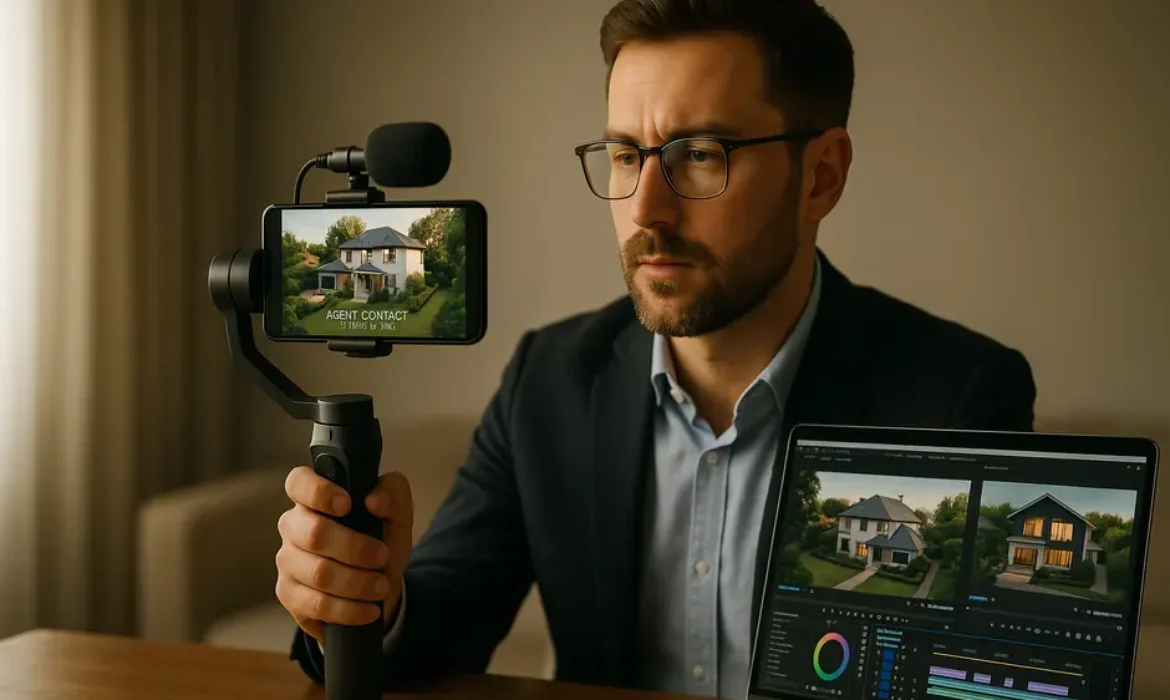
Video Editing for Real Estate Agents: Complete Guide to Property Video Marketing
Estimated reading time: 20 minutes
Why Video Has Become Non-Negotiable in Real Estate
The shift toward video in property marketing was already underway before 2020. The pandemic simply accelerated it dramatically. Virtual tours became an operational necessity, and both buyers and sellers quickly discovered they preferred them to scheduling unnecessary physical visits. That preference did not disappear when restrictions lifted.
Today’s property buyer — whether purchasing a primary residence or an investment property — has high expectations for visual content. They want to see how a property flows. They want to understand the neighbourhood. They want to feel what it might be like to live somewhere before they ever book a showing.
Photography, no matter how professional, cannot deliver that experience. Video can.
From a business perspective, video content also multiplies your marketing reach. A well-produced listing video on YouTube continues generating views weeks, months, and sometimes years after you have posted it. A neighbourhood tour with good SEO becomes a passive lead generator. An Instagram Reel for realtors can reach thousands of people in your target market with zero paid advertising.
The return on investment from video — when approached strategically — is unlike almost anything else available to real estate professionals.
Types of Real Estate Videos You Should Be Producing
Not all real estate video content serves the same purpose, and conflating them is one of the most common mistakes agents make. Here is a breakdown of the primary formats and what each one achieves.
| Video Type | Primary Purpose | Ideal Platform | Recommended Length |
|---|---|---|---|
| Listing Video | Showcase a specific property | Zillow, Realtor.com, MLS, YouTube | 2–4 minutes |
| Virtual Tour | Interactive or cinematic walkthrough | Zillow, your website, YouTube | 3–6 minutes |
| Neighbourhood Tour | Area overview for out-of-town buyers | YouTube, Facebook | 5–10 minutes |
| Drone Footage | Aerial perspective of property and surroundings | YouTube, Instagram, listing pages | 1–2 minutes (standalone) |
| Testimonial Video | Social proof and trust-building | Website, Instagram, Facebook | 60–90 seconds |
| Instagram Reel / Short | Brand awareness and reach | Instagram, TikTok, YouTube Shorts | 15–60 seconds |
| Market Update Video | Establish authority, nurture leads | YouTube, email marketing | 3–7 minutes |
| Agent Introduction Video | Personal branding | Website homepage, LinkedIn | 90 seconds–2 minutes |
Understanding where each format fits within your overall strategy prevents you from producing content that lacks clear direction. Every video you produce should have a defined goal before you press record.
Equipment Basics: What You Actually Need
The real estate videography industry has a problem with over-complication. Agents new to video often believe they need professional-grade cinema cameras, complex lighting rigs, and a full production crew before they can start. They do not.
What matters far more than gear is consistency, storytelling, and editing quality.
A practical starting kit:
- Camera: A modern smartphone (iPhone 15 Pro or equivalent Android flagship) shoots footage that is entirely adequate for social platforms and even listing videos. If you want a dedicated camera, the Sony ZV-E10 or Canon EOS R50 offer excellent value
- Stabilisation: A gimbal such as the DJI OM 6 makes a dramatic difference to perceived production quality. Shaky footage reads as unprofessional immediately
- Audio: A clip-on lavalier microphone is essential if you are speaking to camera. The Rode Wireless Go II is an industry favourite at a reasonable price point
- Lighting: A portable LED panel helps enormously in darker rooms. Natural light is ideal; supplement it rather than fighting it
- Drone: The DJI Mini 4 Pro is a strong choice for aerial footage — compact, high-resolution, and meeting most regulatory weight thresholds
You do not need all of this on day one. Start with what you have, focus on editing and storytelling, and upgrade incrementally.
The Video Editing Process for Real Estate Listings
This is where the real transformation happens. Raw footage from a property walkthrough is rarely compelling. Thoughtful editing is what turns that footage into something a buyer actually wants to watch.
Step 1: Organise Your Footage
Before you open any editing software, organise your clips. Create a clear folder structure — exterior shots, room by room, amenity highlights, neighbourhood context. This sounds basic, but disorganised footage is the primary reason editing takes twice as long as it should.
Step 2: Select Your Best Clips
Be ruthless. A 2-minute listing video will use perhaps 15–25 percent of the footage you actually shot. Select clips based on composition, lighting, and movement. Reject anything shaky, over-exposed, or poorly framed regardless of how much effort went into capturing it.
Step 3: Build Your Story Arc
Listing video production works best when it follows a narrative structure. A common and effective sequence:
- Hook shot — the most visually striking exterior or interior image
- Exterior overview — approach, facade, landscaping
- Room-by-room flow — following the natural path a visitor would walk
- Feature highlights — fireplace, kitchen island, master bathroom
- Outdoor spaces — garden, terrace, pool
- Neighbourhood context — nearby streets, parks, amenities
- Call to action — agent contact, open home details
Step 4: Colour Grade Your Footage
Colour grading is often the single biggest differentiator between amateur and professional-looking listing videos. You do not need complex colour science knowledge to make a meaningful improvement. Most editing software includes real estate-friendly LUT presets that add warmth, improve contrast, and make interiors look inviting. Slightly warm shadows, lifted blacks, and enhanced blues for sky shots create the visual feel buyers associate with premium properties.
Step 5: Add Music
Music has a measurable impact on how buyers emotionally experience a property video. Choose tracks that match the property’s character — contemporary and upbeat for a modern apartment, warm and understated for a family home, cinematic and sweeping for a prestige estate. Sites like Artlist and Epidemic Sound offer royalty-free licensed music specifically suited to property video editing.
Step 6: Add Text and Graphics
Keep on-screen text minimal and purposeful. Property address, key features (bedroom and bathroom count, land area, price where appropriate), and agent contact details are the primary candidates. Use clean, modern fonts. Avoid over-designing.
Step 7: Export in the Right Format
Different platforms have different technical requirements. For YouTube and listing platforms like Zillow and Realtor.com, export at 1080p minimum (4K if your footage supports it) in H.264 or H.265 format. For Instagram Reels, vertical (9:16) framing is essential.
Choosing the Right Editing Software
The editing software landscape is broad. Your choice should be based on your current skill level, the platforms you are targeting, and your budget.
| Software | Best For | Skill Level | Cost |
|---|---|---|---|
| CapCut | Quick social content, Reels, Shorts | Beginner | Free |
| DaVinci Resolve | Full listing videos, colour grading | Intermediate–Advanced | Free / Paid upgrade |
| Adobe Premiere Pro | Professional workflow, long-form content | Intermediate–Advanced | Subscription |
| Final Cut Pro | Mac users, fast efficient workflow | Intermediate | One-time purchase |
| iMovie | Beginners on Mac/iOS | Beginner | Free |
| Canva Video | Simple branded content, agent intro videos | Beginner | Free / Pro |
DaVinci Resolve is the most compelling choice for agents serious about video editing for real estate. It is free, it is used by professional filmmakers, and its colour grading tools are industry-leading. The learning curve is real but worth the investment.
Adobe Premiere Pro makes the most sense if you are already embedded in the Adobe ecosystem and produce a high volume of content regularly.
Platform-Specific Strategy: YouTube, Instagram, Zillow, and More
Producing great video is only half the work. Where and how you distribute that video determines whether it generates leads or simply exists.
YouTube for Real Estate Agents
YouTube is the single most powerful long-term platform for real estate video marketing. It is the world’s second-largest search engine, owned by Google, and videos there can rank both on YouTube itself and in Google Search results.
A strategic real estate YouTube channel should include a consistent mix of listing videos, neighbourhood tours, market update content, and buyer and seller education. Consistency matters more than perfection — channels that publish on a regular schedule build both algorithmic momentum and audience trust.
YouTube’s own creator resources offer detailed guidance on channel optimisation, but the fundamentals are strong thumbnails, keyword-rich titles, detailed descriptions, and organised playlists by neighbourhood or property type.
Instagram Reels for Realtors
Instagram rewards short, visually striking content. For real estate agents, Instagram Reels work best as brief highlights rather than full property tours — think 30 seconds of the most dramatic listing shots, a 45-second drone fly-through, or a quick neighbourhood introduction. The goal on Instagram is reach and awareness, not deep information delivery.
Use location tags, relevant hashtags (area-specific rather than generic), and post consistently to build a local audience.
Zillow and Realtor.com
Listing video on Zillow and Realtor.com sits directly in front of actively searching buyers — arguably the highest-intent audience you can reach. Video embedded on listing pages dramatically increases time-on-page and inquiry rates. Keep these videos tightly focused on the property itself, professionally edited, and accompanied by thorough written descriptions.
Virtual tour editing for these platforms requires specific attention to flow and pacing — buyers are evaluating, not just browsing, so the video needs to be informative rather than purely cinematic.
Drone Footage: Elevating Your Listings Literally and Figuratively
Aerial footage transforms how buyers perceive a property. It contextualises the home within its surroundings, showcases land size and privacy, highlights proximity to desirable amenities (water, parks, schools), and adds immediate production value that photography cannot match.
That said, drone footage for real estate is not simply a matter of flying your drone over a listing and editing the footage together. There are regulatory requirements that vary by country and region. In the United States, the FAA requires drone operators flying commercially — which includes real estate marketing — to hold a Part 107 Remote Pilot Certificate. The FAA’s UAS resources provide full guidance on certification and airspace authorisation requirements.
If you do not want to pursue certification yourself, hiring a licensed drone operator is the straightforward alternative. The cost is typically modest in relation to the production value added.
In editing, aerial footage works best integrated naturally into your listing video rather than segregated into a standalone section. Open with an aerial approach shot, use drone footage to transition between exterior and interior sections, and close with a sweeping aerial pull-back. This creates a cinematic experience that holds viewer attention.
Neighbourhood Tour Videos: The Underrated Lead Generator
Most real estate agents focus entirely on listing-specific content and neglect neighbourhood tour videos almost entirely. This is a significant missed opportunity.
A neighbourhood tour video answers one of the most common questions buyers — particularly relocating buyers — have: what is it actually like to live here? Professional photography on a listing page cannot answer that question. A well-produced neighbourhood tour can.
These videos also have a compounding SEO benefit. A YouTube video titled “Living in [Suburb Name]: Everything You Need to Know” can rank for local search terms, attract buyers who are not yet in active search mode, and position you as the go-to authority for that area before a potential client has even considered which agent to use.
What to cover in a neighbourhood tour:
- Character and streetscape of the area
- Key amenities — coffee shops, restaurants, supermarkets, gyms
- Parks, walking trails, and recreational facilities
- School catchments (particularly important for family buyers)
- Public transport access
- Community events or notable local institutions
- Typical property styles and what attracts buyers to the area
Shoot these in a relaxed, presenter-led style. Authenticity matters here more than high production value.
Testimonial Videos That Actually Convert
Client testimonial videos are among the most powerful trust signals available to real estate agents, yet most agents either never produce them or produce them in a way that strips them of credibility.
The key distinction between a testimonial video that converts and one that does not is specificity. Vague praise (“She was amazing, we loved working with her”) does not move a prospective client. Specific, story-driven accounts do.
Coach your clients before filming to speak to:
- Where they were before working with you (stress, uncertainty, a previous failed sale attempt)
- What specifically made the experience different
- A tangible outcome (sold above asking price, found the right home in a difficult market, a smooth transaction despite complex circumstances)
- How they feel now
Film these in natural settings — the client’s new home, a comfortable indoor environment — rather than against plain backdrops. Keep editing minimal. Light colour grading, clean titles with the client’s name and brief context, and natural ambient audio are all you need. Overproducing a testimonial makes it feel staged.
Distribute testimonial videos on your website’s homepage and about page, in email marketing campaigns, and on Instagram and Facebook.
SEO for Real Estate Videos
Video SEO is a discipline that dramatically amplifies the reach of content you have already invested time in creating. Without it, even excellent videos struggle to find their audience.
YouTube SEO essentials:
- Title: Include your primary keyword naturally within the first 60 characters. “Living in [Suburb Name] in 2025: A Honest Neighbourhood Tour” is more effective than “Neighbourhood Tour Video”
- Description: Write a minimum of 200 words in your video description. Include your primary and secondary keywords naturally, your contact details, links to related videos, and chapter markers for longer content
- Tags: Use a mix of specific and broader tags — property address, suburb name, city, “real estate [city]”, “homes for sale [area]”
- Thumbnails: Custom thumbnails with clear, high-contrast property images and minimal text dramatically improve click-through rates
- Chapters: For videos over 3 minutes, add timestamp chapters. YouTube surfaces these in search results, increasing visibility
Listing page video SEO:
When embedding videos on your website’s listing pages, use structured data markup as outlined by Google’s developer documentation to make your videos eligible for rich results in Google Search. Include a written transcript where possible — this gives search engines additional text to index.
Key Takeaways
-
- Listings with video consistently outperform those without in both inquiry volume and time on market
- Identify the purpose of each video before production — listing showcase, neighbourhood tour, testimonial, and brand content serve different goals and audiences
- You do not need expensive equipment to start. A modern smartphone, a gimbal, and a basic lavalier microphone are sufficient for early-stage production
- Editing quality matters more than shooting quality. Colour grading, music selection, and pacing transform raw footage into a compelling property experience
- YouTube is the highest-leverage platform for long-term real estate video marketing — treat it as an asset that compounds over time, not a social media posting exercise
- Neighbourhood tour videos are an underused lead generation tool with strong SEO upside
- Video SEO is not optional — it is what determines whether your content reaches qualified buyers or disappears into obscurity
Frequently Asked Questions
1. How long should a real estate listing video be?
The ideal length depends on the property and the platform. For listing pages on Zillow or Realtor.com, two to four minutes is the sweet spot — long enough to showcase the property thoroughly, short enough to hold attention. For YouTube, you have more flexibility, particularly if the property is substantial or unique. Virtual tour videos can run to five or six minutes without significant drop-off, provided the pacing is strong. Instagram content should be under 60 seconds. The rule of thumb is: include everything relevant, cut everything that isn’t.
2. Do I need professional video editing skills to produce good real estate videos?
Not necessarily. The barrier to entry is much lower than most agents assume. Basic familiarity with software like DaVinci Resolve or CapCut, combined with a good eye for composition and a willingness to learn colour grading fundamentals, will produce results that substantially outperform unedited footage. There are also numerous tutorial resources available for real-estate-specific video editing on YouTube itself. That said, for prestige or luxury listings where the production standard is a significant part of the marketing story, professional production is worth the investment.
3. Is drone footage worth the cost for standard residential listings?
For mid-range to upper-end residential listings, yes — the production value added by aerial footage typically justifies the cost. Drone footage is particularly impactful for properties with large land areas, waterfront or elevated positions, distinctive architecture, or where proximity to amenities is a selling point. For compact urban apartments where the exterior context adds little, it is less essential. If you are hiring a drone operator, typical costs in most markets range from $150 to $500 depending on the scope of work.
4. How do I build a real estate YouTube channel from scratch?
Start with a clear niche — typically the specific city, suburb cluster, or property type you specialise in. Publish consistently, even if that means monthly initially. Prioritise neighbourhood tour content early because it has strong search intent and long shelf life. Optimise every video for YouTube search using keyword-rich titles, detailed descriptions, and custom thumbnails. Engage with every comment. Cross-promote your videos in email marketing, on your website, and across your social platforms. Growth is slow initially; agents who persist past the first six months typically see compounding returns.
5. What music can I legally use in real estate videos?
Using commercially released music without a license in any video — including real estate marketing content — exposes you to copyright claims that can result in the video being muted, removed, or monetised by the rights holder. Use royalty-free music from licensed platforms specifically designed for content creators. Artlist, Epidemic Sound, and Musicbed are the most widely used in the real estate video production space and offer annual subscriptions that cover broad usage rights including commercial content.
6. Should I appear on camera in my listing videos?
For listing-specific videos, the property should be the star — agent on-camera time should be minimal or limited to an introduction and closing call to action. For neighbourhood tours and market update videos, presenter-led content with you on camera is highly effective because it builds personal connection and establishes you as the local authority. Testimonial-style content and educational videos aimed at buyers or sellers benefit enormously from an authentic on-camera presence. Think of your on-camera appearances as relationship-building at scale.
7. How do I get my listing videos seen by buyers, not just people who already follow me?
Platform-specific SEO is the primary lever. On YouTube, keyword-optimised titles and descriptions help your videos appear in search results. On Instagram, location tags and targeted hashtags extend reach beyond your existing followers. On Zillow and Realtor.com, video embedded directly on listing pages is seen by actively searching buyers with no additional distribution effort required. Paid social advertising — even a modest budget targeting specific geographic areas and buyer demographics — can also put listing videos in front of highly qualified audiences. Collaboration with local businesses and community accounts in neighbourhood tour content helps reach buyers who are researching an area before entering active search.
Conclusion
Video has permanently changed how property is marketed, and the agents who treat it as a core discipline rather than an occasional extra are pulling further ahead of the market each year. The good news is that the gap between what most agents are producing and what is actually possible is smaller than you might think — and the tools, resources, and knowledge to close that gap are entirely accessible.
Start with a clear content strategy. Build your editing skills progressively. Invest in your YouTube channel as a long-term asset. Use neighbourhood tours to plant flags in markets before competitors think to. And treat every video you produce as both a service to potential clients and a permanent piece of your marketing infrastructure.
The agents consistently generating the highest quality leads in competitive markets are almost always the ones with the most thoughtful, consistent video presence. That is not a coincidence.
For further reading on video marketing best practices, HubSpot’s Video Marketing Guide and Think with Google’s insights on video consumer behaviour are excellent resources worth bookmarking.