
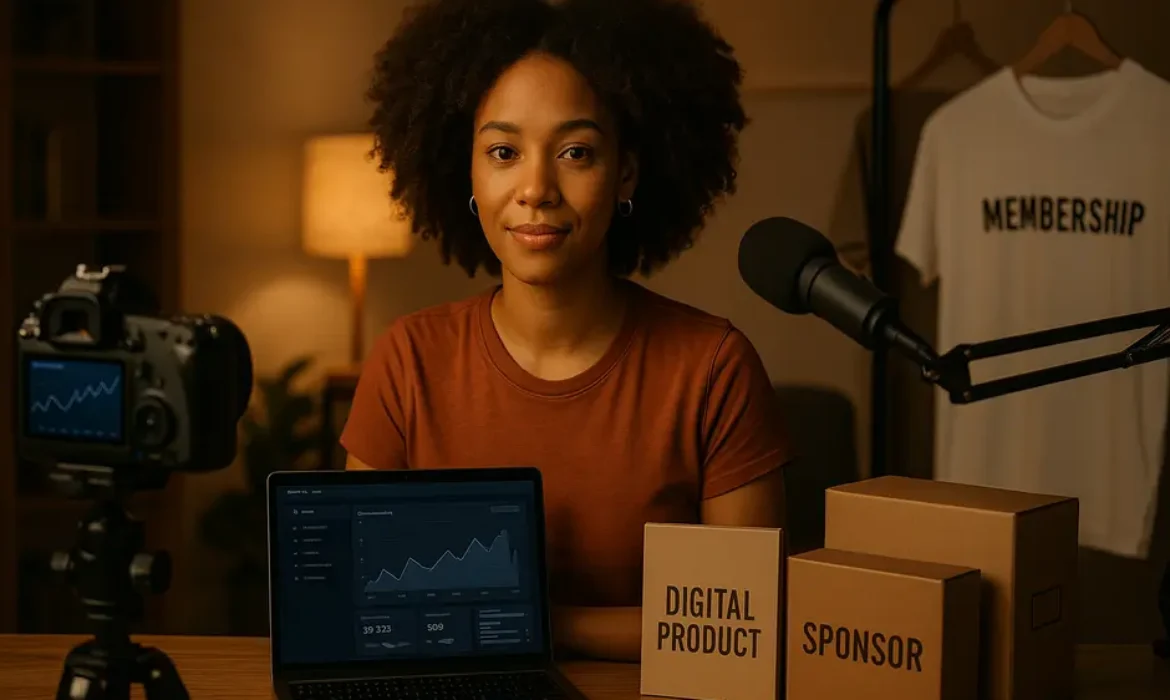
How to Make Money on YouTube Without Millions of Views
Estimated reading time: 16 minutes
1. The Myth That Views Equal Income
Most people assume that making money on YouTube is a numbers game. Get a million views, earn a few thousand dollars from ads, repeat. That logic made sense ten years ago when AdSense was the only real option on the table. Today, it is one of the least efficient ways to earn from a channel — especially when you are just starting out.
Here is a number that puts things in perspective: the average YouTube CPM (cost per thousand views) sits somewhere between $1 and $5 for most niches. That means a video with 50,000 views might generate $50 to $250 in ad revenue. Before the platform takes its 45% cut. Before taxes. Not exactly the income model dreams are made of.
But here is what changes everything. Creators who understand how to monetise a YouTube channel beyond AdSense are routinely earning $5,000, $10,000, or more per month with audiences in the low thousands. Not because they found a loophole, but because they stopped thinking like broadcasters and started thinking like business owners.
This guide is about exactly that shift — and every practical, proven method that makes it work.
2. Why Small Channels Are Actually Better Positioned Than You Think
There is a concept in marketing called audience specificity, and smaller YouTube channels tend to have it in abundance. When your channel has 2,000 highly engaged subscribers interested in personal finance for freelancers, or home fermentation, or drone photography, you have something that mass-appeal channels with a million subscribers often struggle to offer: trust and relevance.
Brands increasingly understand this. The influencer marketing industry was valued at over $21 billion in 2023 according to Statista, and a growing share of that spend is moving toward micro-creators (channels with 1,000 to 100,000 subscribers) because engagement rates are higher and conversion rates often outperform those from mega-influencers.
A viewer who has followed your 5,000-subscriber channel for six months trusts your opinion. They watch your videos in full. They read your pinned comments. They click your links. That relationship is genuinely valuable, and it is something you can build a real business around long before you hit any arbitrary view threshold.
3. YouTube Monetisation Without AdSense: The Full Picture
To be clear, the YouTube Partner Program (YPP) still has its place. Once you hit 1,000 subscribers and 4,000 watch hours (or 10 million Shorts views under the updated requirements), enabling AdSense is sensible. It requires no extra work and generates passive income in the background.
But relying on it as your primary revenue stream is a strategic mistake. The following table illustrates just how stark the contrast can be between passive ad income and intentional monetisation.
| Revenue Stream | Typical Earning Potential | Audience Size Required | Effort Level |
|---|---|---|---|
| AdSense/CPM Ads | $1–$5 per 1,000 views | Large (100K+) | Low |
| Affiliate Marketing | $50–$5,000+/month | Small to Medium | Medium |
| Digital Products | $500–$20,000+/month | Small (500+) | High (upfront) |
| Sponsorships | $200–$10,000+ per deal | Small to Medium | Medium |
| Online Courses | $1,000–$50,000+/month | Small (niche) | High (upfront) |
| Channel Memberships | $100–$3,000+/month | Engaged community | Medium |
| Coaching/Consulting | $1,000–$20,000+/month | Very Small (50+) | High (ongoing) |
| Merchandise | $200–$5,000+/month | Loyal community | Medium |
As you can see, the highest-earning strategies often require the smallest audience — they just require the right audience and the right offer.
4. Affiliate Marketing on YouTube: The Quiet Revenue Machine
Affiliate marketing is arguably the most accessible and scalable way to make money on YouTube without views in the millions. The mechanics are simple: you recommend a product or service, include a tracked affiliate link in your description, and earn a commission when viewers purchase through it.
What makes YouTube particularly powerful for affiliate marketing is the longevity of video content. A well-optimised video can surface in search results for years. That review you filmed about a project management tool in 2022 is still generating clicks — and commissions — in 2025. Written blog posts can do this too, but video builds the trust that converts.
Affiliate programs worth considering by niche:
- Software and SaaS: Programs like those offered through Impact or PartnerStack often pay 20–40% recurring commissions
- Amazon Associates: Lower commissions (typically 1–10%) but applicable to nearly any product category
- Financial products: Credit cards, investment platforms, and insurance products frequently offer $50–$200 per lead
- Online courses and education platforms: Teachable, Kajabi, and Coursera all run affiliate schemes with strong commission rates
How to integrate affiliate marketing without it feeling transactional:
The creators who earn the most from affiliate marketing do not lead with links. They build content around genuine recommendations. A video titled “The Exact Tools I Use to Edit YouTube Videos” outperforms a video titled “Best Video Editing Software” because it carries personal authority. Viewers trust that the creator has actually used what they are recommending.
Always disclose affiliate relationships clearly. Beyond being an ethical standard, it is required by the FTC guidelines on endorsements, and YouTube’s own policies. Transparency does not hurt conversions — in most cases, it strengthens them.
5. Selling Digital Products Directly From Your Channel
If affiliate marketing is the entry-level monetisation strategy, digital products are the graduate level. The margin is 100% (minus platform fees), the delivery is automated, and a single well-designed product can generate income indefinitely.
The types of digital products that sell consistently from YouTube channels include:
- Templates (Notion, Canva, Excel, Figma)
- Ebooks and guides
- Presets (Lightroom, video LUTs)
- Swipe files and resource libraries
- Audio samples, music packs, or sound design kits
- Printables and planners
Platforms like Gumroad make it remarkably easy to list and sell digital products without technical overhead. You can have a product live in under an hour, and link to it from every relevant video description.
What makes this work with a small audience:
Conversion is about relevance, not reach. A channel with 3,000 subscribers teaching UI/UX design can sell a $29 icon pack or $97 Figma component library and generate thousands of dollars in monthly revenue — because the audience came specifically for that type of content. They are already pre-qualified buyers.
The key is alignment. Your digital product should solve the exact problem your videos address. If you are making videos about meal prepping for busy professionals, a $15 downloadable meal planning system is a natural, frictionless purchase for your viewers. It extends the value of your content rather than interrupting it.
6. Sponsorships and Brand Deals for Micro-Creators
Brand deals for micro-creators have gone from a niche practice to a mainstream budget line for savvy marketing departments. Companies have realised that a well-placed mention in a tightly relevant video often outperforms a banner campaign reaching hundreds of thousands of disengaged people.
What brands are actually paying:
| Channel Size | Typical Sponsorship Rate (per video) |
|---|---|
| 1,000–5,000 subscribers | $100–$500 |
| 5,000–25,000 subscribers | $500–$2,000 |
| 25,000–100,000 subscribers | $2,000–$8,000 |
| 100,000–500,000 subscribers | $8,000–$30,000 |
These are estimates, not guarantees. Channels in high-value niches like finance, technology, or B2B software consistently command rates at the top of these ranges or well beyond them.
How to land your first brand deal without a booking agent:
Start by identifying brands that already sponsor channels in your niche. Study their talking points and campaign styles. Then reach out directly — not with a vague “collaboration inquiry,” but with a specific, data-backed pitch. Your media kit should include subscriber count, average views per video, audience demographics, engagement rate, and one or two examples of content that aligns with their product.
Platforms like Passionfroot, Grapevine, and Creator.co connect brands with smaller creators and can help you build your first sponsorship relationships while you are growing.
One important distinction: there is a difference between sponsored content and a genuine editorial partnership. The most successful brand deals happen when there is authentic alignment between the product and the creator’s values. Viewers can detect inauthenticity quickly, and a poorly matched sponsorship can damage the trust you have spent months building.
7. Channel Memberships, Patreon, and Community Revenue
Recurring revenue is the holy grail of any creator business, and YouTube’s channel membership feature — along with external platforms like Patreon — makes it achievable even with a modest subscriber base.
YouTube channel memberships allow subscribers to pay a monthly fee (starting from $0.99 in some regions, but most creators set tiers between $2.99 and $24.99) in exchange for perks like exclusive content, badges, custom emojis, and early access to videos.
Patreon operates on the same model but outside YouTube’s ecosystem, which gives you more flexibility and means you retain a greater portion of revenue (Patreon takes 5–12% depending on the plan, compared to YouTube taking 30% of membership revenue).
What actually makes memberships work:
The channels that build sustainable membership income do not just offer access — they offer community. Discord servers, monthly live Q&As, behind-the-scenes content, and the feeling of being part of an inner circle are what convert casual viewers into paying members.
A channel with 4,000 subscribers that converts 3% of its audience into $5/month Patreon supporters is earning $600 per month from memberships alone. Convert 5%, and you are approaching $1,000 before a single ad runs. These numbers are modest but consistent, and they compound over time as your audience grows.
8. Online Courses, Coaching, and Consulting
For creators with genuine expertise, selling online courses or offering coaching services represents one of the highest-leverage monetisation strategies available — and it does not require a large audience to be profitable.
Consider the math: a $297 online course sold to 50 people generates $14,850. A $500/month coaching package with 10 clients generates $5,000 per month. Neither of these outcomes requires anything close to viral reach. They require the right positioning and a compelling offer that solves a real problem.
YouTube serves as the perfect top-of-funnel for course and coaching businesses. Your videos demonstrate your knowledge, build trust over time, and naturally guide interested viewers toward a deeper paid engagement with your work.
Platforms like Teachable, Kajabi, and Podia handle the technical side of course delivery. For coaching, a simple booking tool like Calendly combined with a Stripe payment link is often all you need to get started.
The positioning principle that changes everything:
The most successful course creators on YouTube do not teach everything for free. They create content that solves specific surface-level problems while making it clear that deeper transformation — the kind that produces real, lasting results — comes from the course or programme. There is an art to this balance, and it takes practice, but the principle is straightforward: your free content builds trust, your paid content delivers transformation.
9. Merchandise Without a Massive Audience
Merchandise is often listed as a monetisation strategy best left until a creator has tens of thousands of loyal fans. And for generic branded merchandise — a t-shirt with your channel logo — that is probably true.
But merchandise tied directly to your community’s identity or inside references is a different proposition entirely. A channel built around a specific philosophy, aesthetic, or community vocabulary can sell merchandise profitably with a few hundred highly engaged fans.
Print-on-demand services like Printful, Printify, and Teespring (now Spring) eliminate upfront inventory risk. You design the product, connect it to your channel through YouTube’s merchandise shelf (available to channels with 10,000+ subscribers), and earn a margin on each sale without handling fulfilment.
The creators who succeed with merchandise at small scale tend to think of it less as a revenue stream and more as a community artefact — something their audience wants to own because it represents something they genuinely identify with.
10. Super Thanks, Super Chats, and Platform-Native Revenue
YouTube has expanded its suite of creator monetisation tools considerably in recent years. Super Thanks allows viewers to purchase an animated thank-you and have their comment highlighted on any video — not just live streams. Super Chats and Super Stickers serve a similar function during live broadcasts.
These features are available to channels enrolled in the YouTube Partner Program, and while they rarely become primary revenue drivers, they add a meaningful layer of direct financial support from your most engaged viewers.
Super Thanks in practice:
Channels that generate consistent Super Thanks tend to have strong viewer-to-creator relationships. Tutorial channels, educational content, and any video where someone credits your work with a real breakthrough in their life are natural candidates. Prompting viewers with something as simple as “If this video saved you time, Super Thanks is always appreciated” at the end of a video is enough to activate this behaviour.
It will not replace sponsorship income or product sales, but over the course of a year, a channel that receives $10 to $50 in Super Thanks per video across a catalogue of 50+ videos is generating several hundred to a few thousand dollars annually in pure tip revenue.
11. How to Stack These Revenue Streams Strategically
The creators earning consistent, significant income from small YouTube channels are almost never relying on a single stream. They are stacking complementary revenue sources in a way that makes the total greater than the sum of its parts.
A practical example of a stacked revenue model for a channel in the personal finance niche with 8,000 subscribers:
- Affiliate links to budgeting apps, investment platforms, and financial books: $800–$2,500/month
- One digital product (a budget spreadsheet template at $27): $400–$1,200/month
- One monthly sponsor at the micro-creator rate: $500–$1,500/month
- Patreon membership at $7/month with 80 patrons: $560/month
- AdSense: $150–$400/month
Total monthly estimate: $2,410–$6,160
From a channel with 8,000 subscribers. That is not a hypothetical — it is a realistic outcome for a creator who has built a genuinely useful channel, treats it like a business, and understands how to serve an audience well.
The key insight is sequencing. Do not try to launch everything simultaneously. Start with the revenue stream that requires the least overhead (typically affiliate marketing), prove the model, then layer in digital products, then pursue sponsorships once you have social proof. Memberships and courses make most sense once your audience knows, trusts, and actively engages with you.
Key Takeaways
-
- AdSense alone is an inefficient monetisation strategy, especially for channels under 100,000 subscribers
- Affiliate marketing offers the fastest route to meaningful low view YouTube income with minimal upfront investment
- Digital products, courses, and coaching consistently generate the highest revenue per subscriber of any monetisation method
- Brand deals and sponsorships are genuinely accessible to micro-creators in the right niches — engagement and relevance matter more than raw subscriber numbers
- Channel memberships and Patreon create the recurring revenue foundation that makes a creator business financially stable
- Stacking multiple revenue streams, introduced in a logical sequence, is what separates hobbyists from professional creators
- A highly engaged audience of 2,000 is commercially more valuable than a passive audience of 200,000
Frequently Asked Questions
Q1: How many subscribers do you need to start making money on YouTube?
Technically, you do not need any subscribers to start earning. Affiliate marketing and digital product sales can generate income from your first video if the content drives relevant traffic and includes well-placed links. The YouTube Partner Program requires 1,000 subscribers and 4,000 watch hours to unlock AdSense and channel memberships, but those are platform-specific thresholds, not prerequisites for earning. Plenty of creators generate meaningful income long before hitting those numbers.
Q2: Is affiliate marketing on YouTube still worth it in 2025?
Absolutely, and arguably more so than ever. As short-form content floods social platforms, long-form YouTube videos that provide genuine product guidance, tutorials, and comparison content occupy a valuable and less crowded space. Viewers who arrive on a detailed product review are in a high-intent mindset — they are actively researching a purchase. That context makes YouTube affiliate conversions consistently strong across niches.
Q3: What is the best digital product to sell on a YouTube channel?
The best digital product is one that directly extends the value of your video content. If you teach something in your videos, a template, worksheet, guide, or tool that helps viewers implement what they just learned tends to convert extremely well. Canva templates, Notion dashboards, Lightroom presets, and budget spreadsheets are all proven formats that combine perceived value with low production cost. The ideal price point for entry-level digital products sits between $9 and $49 to minimise purchase friction.
Q4: How do I get brand deals with a small channel?
Start by building a one-page media kit that clearly communicates your audience demographics, average engagement rate, niche, and the value you offer to brand partners. Then reach out proactively to brands whose products you already use and genuinely recommend. Specificity in your pitch matters enormously — explain exactly what you would create, how it serves their target customer, and why your audience is the right fit. Creator marketplaces like Passionfroot and Grapevine also connect smaller channels with brand campaigns actively seeking micro-creator partnerships.
Q5: Does YouTube take a cut of Patreon or digital product sales?
No. Revenue earned through external platforms like Patreon, Gumroad, Teachable, or direct affiliate links sits entirely outside YouTube’s monetisation ecosystem. YouTube takes 30% of revenue earned through its own native features — channel memberships, Super Thanks, and Super Chats. This is one reason many creators use YouTube as a traffic and trust-building channel while hosting their paid products and communities on independent platforms where they retain more control and a larger share of revenue.
Q6: Can you make a full-time income on YouTube with under 10,000 subscribers?
Yes, and it happens more often than most people assume. The creators who achieve this typically have highly specific, commercially relevant niches; strong audience relationships built over consistent content; and multiple revenue streams operating simultaneously. A creator in the B2B software space, legal education, or financial advisory niche with 5,000 engaged subscribers can comfortably earn $5,000 to $15,000 per month through a combination of affiliates, sponsorships, and their own products. Niche selection is arguably the single most important variable in this outcome.
Q7: What is the easiest way to start monetising a YouTube channel with no audience yet?
The most accessible starting point is affiliate marketing. Join a relevant affiliate programme, create content that naturally incorporates product recommendations, include your tracked links in video descriptions, and optimise your videos for YouTube search around terms your target viewer is already searching. There is no audience requirement, no product to build, and no sponsorship negotiation needed. As your catalogue grows and your channel gains authority, the affiliate revenue compounds — and you will have built an audience primed to purchase your own products when you are ready to create them.
Conclusion
The prevailing narrative around YouTube income — that you need millions of views to earn meaningful money — is not just outdated, it is actively misleading for the majority of creators trying to build something real.
The platform has evolved into a sophisticated ecosystem where the size of your audience is far less important than the depth of your relationship with it, the relevance of your niche, and your willingness to think commercially about what you create. Affiliate commissions, digital product sales, niche sponsorships, memberships, and coaching revenue are all available to creators who understand that YouTube is a distribution channel first and an ad network second.
The creators thriving right now are not waiting to go viral. They are building specific audiences, solving genuine problems, and monetising with intention. That approach is available to anyone willing to commit to it — and it starts long before the subscriber count hits any particular milestone.
All earning estimates referenced in this article reflect general market observations and creator-reported income ranges. Individual results vary based on niche, content quality, consistency, and business strategy.