LinkedIn Video Marketing: How to Build Authority and Generate Leads with Video
Estimated reading time: 14 minutes
Introduction
Most marketers know LinkedIn is a serious professional platform. But many still treat it like a digital resume — a place to post job updates, reshare industry articles, and occasionally drop a text post that gets twelve likes from colleagues. That approach worked years ago. Today, it leaves a significant competitive gap for anyone willing to do something different.
LinkedIn video marketing has quietly become one of the highest-leverage channels available for B2B brands, consultants, executives, and service providers. Not because video is universally magical, but because LinkedIn’s audience — over one billion members, the majority of whom are active decision-makers — consumes video content at a meaningfully different level than passive scrollers on consumer platforms.
According to LinkedIn’s own marketing blog, video content generates five times more engagement than static posts on the platform. That number matters more in context: LinkedIn’s audience isn’t your typical social media demographic. These are procurement managers, C-suite executives, department heads, and founders — people with actual purchasing authority.
This guide is for anyone who wants to move beyond surface-level advice and build a real LinkedIn video strategy. Whether you’re a solo practitioner working on your personal brand or a marketing team at a B2B company, the principles here are practical, tested, and designed to produce tangible outcomes.
Why LinkedIn Video Deserves Your Full Attention
Let’s start with the honest reality: LinkedIn is oversaturated with mediocre written content. Motivational posts, thinly veiled self-promotion, and recycled industry takes flood most people’s feeds every morning. That saturation actually creates an opening.
Video, specifically LinkedIn native video, consistently cuts through the noise because it demands more sensory engagement. A viewer watches your facial expression, hears your tone of voice, and processes your confidence or lack of it — all within the first three seconds. No text post can replicate that level of connection.
More importantly, LinkedIn’s user base is in an active professional mindset when they log in. Unlike Instagram or TikTok, where entertainment is the primary driver, LinkedIn users are thinking about their businesses, careers, and challenges. That intent alignment is enormously valuable. When your video speaks directly to a business problem they’re wrestling with, the relevance hits differently.
The numbers back this up. Wyzowl’s State of Video Marketing Report consistently finds that over 80% of marketers say video has directly helped increase sales. On LinkedIn specifically, video ads generate three times the engagement of plain text ads, according to LinkedIn Marketing Solutions data.
For B2B video marketing in particular, LinkedIn isn’t just a nice-to-have channel — it’s increasingly the dominant one.
How the LinkedIn Algorithm Treats Video Content
Understanding the LinkedIn algorithm isn’t about gaming the system. It’s about working with how the platform distributes content so your videos reach the right people.
LinkedIn’s algorithm evaluates several factors when deciding how widely to distribute any piece of content. For video specifically, a few signals carry disproportionate weight:
Dwell time is the most significant. LinkedIn tracks how long someone pauses on your video — not just whether they clicked play. If someone stops scrolling and watches for fifteen or thirty seconds, even without engaging, the algorithm registers that as a positive signal. This means your opening hook is everything. You need to earn that pause in the first two to three seconds.
Early engagement velocity also matters significantly. Comments, reactions, and shares within the first sixty to ninety minutes of posting tell the algorithm that the content resonates. This is why timing and community matter — posting when your network is active and having genuine relationships with people who engage thoughtfully accelerates distribution.
Native video outperforms linked video. LinkedIn demonstrably suppresses reach on posts that link out to external platforms, including YouTube. Uploading video directly to LinkedIn — native video — keeps users on the platform, which aligns with LinkedIn’s business interest. Always upload directly.
Completion rates signal quality. If viewers are watching your videos to the end or close to it, that behavior tells the algorithm your content is worth surfacing to more people. Shorter, focused videos tend to perform better on this metric than meandering, overlong ones.
The practical implication: structure your videos to hook immediately, deliver dense value without padding, and end cleanly. The algorithm rewards efficiency.
Types of LinkedIn Videos That Actually Work
Not all video formats are equal on LinkedIn. The platform’s professional context means certain approaches resonate far more than others.
Talking Head Videos
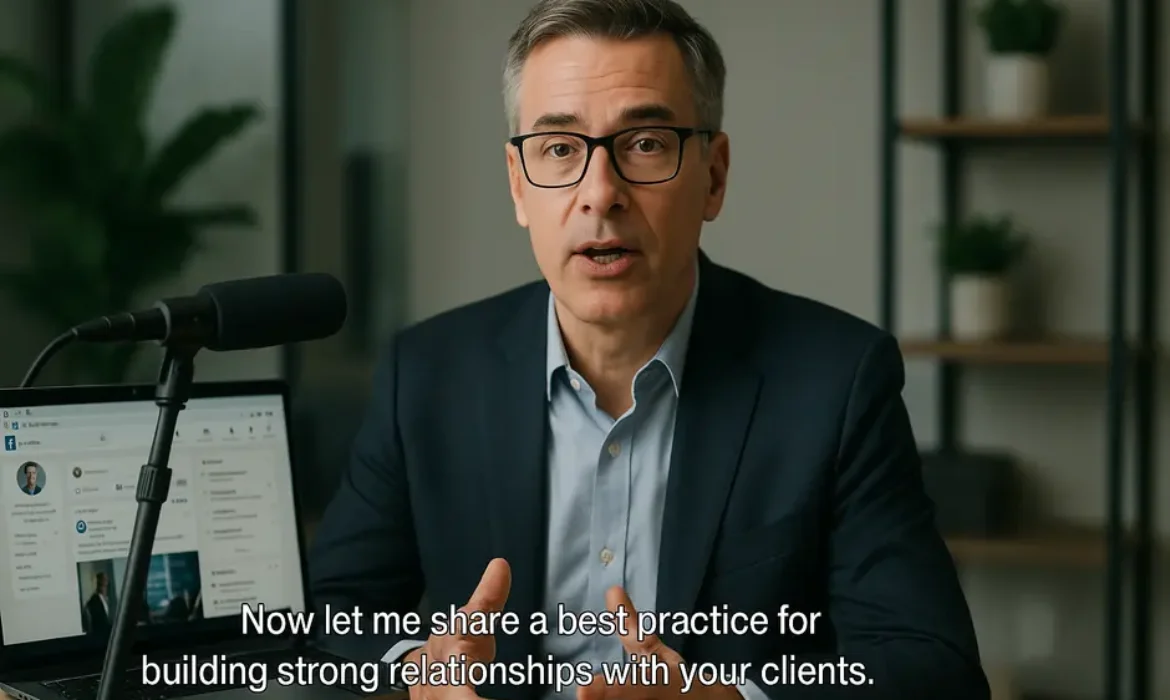
The most common format — someone speaking directly to the camera — works well on LinkedIn because it humanizes the person or brand behind the content. For executives and consultants, this is the fastest way to build trust at scale. The production quality doesn’t need to be broadcast-level. A clean background, good lighting, and clear audio are enough.
Educational Explainer Videos
Short videos that teach one specific thing perform exceptionally well. “How I reduced our sales cycle by 30%” or “Three questions every CFO should ask before signing a SaaS contract” — these titles speak directly to a professional problem and promise a specific payoff. The educational angle positions you as a thought leader without requiring you to make explicit claims about your expertise.
Behind-the-Scenes and Process Videos
Showing how your team works, how a project came together, or what your actual workflow looks like builds credibility in a way that polished promotional content cannot. B2B buyers are inherently skeptical. Authenticity is a differentiator.
Client Story Videos
Case studies in video form — featuring real clients describing a real problem and real outcome — are among the highest-converting video types for B2B lead generation. These don’t need heavy production. A straightforward conversation format often feels more credible than a slickly edited testimonial reel.
Event and Conference Clips
Quick takeaways from events, keynotes, or panel discussions demonstrate active industry participation and consistently attract engagement from professional communities.
| Video Type | Primary Goal | Ideal Length | Production Level |
|---|---|---|---|
| Talking Head | Trust building | 60–90 seconds | Low to medium |
| Educational Explainer | Authority + SEO | 90–180 seconds | Low |
| Behind-the-Scenes | Humanization | 30–60 seconds | Low |
| Client Story | Lead generation | 2–4 minutes | Medium |
| Event Clip | Community engagement | 30–60 seconds | Low |
| Product Demo | Conversion | 2–5 minutes | Medium to high |
Building a LinkedIn Video Strategy That Drives B2B Results
A random series of videos isn’t a strategy. Real LinkedIn video strategy requires intentionality about who you’re trying to reach, what action you want them to take, and how each video fits into a broader content system.
Define Your Audience with Precision
LinkedIn’s targeting capabilities — especially if you’re running paid video campaigns — are among the most precise in digital marketing. You can target by job title, seniority, industry, company size, and even specific companies using LinkedIn Sales Navigator audiences. But even for organic video, you should write and film as if speaking to a specific person, not a generic audience.
Ask yourself: who is the decision-maker most likely to buy from me or refer me? What does their daily professional life look like? What language do they use internally when describing the problem I solve? Build your video content around those answers.
Create a Content Pillar Framework
Rather than posting random videos whenever inspiration strikes, build a small set of content pillars — two to four core themes that connect directly to your business and your audience’s needs. For a B2B SaaS company, pillars might include operational efficiency, team leadership, and SaaS implementation. Every video you produce slots into one of those pillars.
This approach builds topical authority over time. LinkedIn’s algorithm, like Google’s, rewards accounts that consistently produce content in a defined area rather than jumping between unrelated topics.
Consistency Over Volume
Posting two high-quality videos per week consistently for six months will dramatically outperform posting ten videos in a burst and then going silent. LinkedIn rewards consistent creators with progressive reach expansion. Build a production rhythm you can actually sustain.
The Companion Post Strategy
LinkedIn video posts that include a well-written text caption significantly outperform those with minimal or generic captions. Use the caption to expand on the video’s key point, invite a specific question, or give viewers who didn’t watch a reason to engage. The caption should complement the video, not just describe it.
Technical Best Practices for LinkedIn Native Video
Technical quality affects how your content is perceived, even among audiences who aren’t consciously evaluating production values.
Resolution and Format: Upload video in MP4 format with a minimum resolution of 1080p. LinkedIn supports both landscape (16:9) and portrait (9:16) formats. Portrait videos tend to perform better on mobile, which now accounts for a significant portion of LinkedIn usage.
Captions are non-negotiable. A substantial portion of LinkedIn users browse with sound off. According to data from Verizon Media and Publicis, 69% of people watch video with the sound off in public places. Auto-generated captions are a minimum; edited captions are better.
File size and length: LinkedIn accepts videos up to 10 minutes, but that doesn’t mean you should use all ten minutes. For organic posts, 60 to 180 seconds typically yields the strongest completion rates and algorithmic distribution. Reserve longer formats for video ads or LinkedIn Live.
Thumbnail selection: LinkedIn allows you to choose a custom thumbnail. Use it. A face — specifically, a face making deliberate eye contact — consistently outperforms text-only or abstract thumbnails in click-through scenarios.
Audio quality: Poor audio is the fastest way to lose a viewer. A $30 lapel microphone will improve your audio quality more than a $300 camera upgrade. Prioritize sound.
LinkedIn Thought Leadership Video: Positioning Yourself as an Expert
LinkedIn thought leadership isn’t about broadcasting credentials. It’s about consistently demonstrating that you think clearly about things your audience cares about.
The most effective thought leadership videos on LinkedIn share a few characteristics. They take a specific, defensible position on something. They explain the reasoning behind that position. And they invite the audience to think differently about a problem they already have.
Vague “inspirational” content doesn’t build thought leadership. “Failure is part of success” says nothing. “Why we stopped tracking activity metrics for our sales team and what we tracked instead” says something specific and earns attention from the right people.
Here’s a simple framework for thought leadership video content:
- Name the conventional belief your audience holds
- Challenge it with your own experience, data, or reasoning
- Offer the alternative perspective and explain why it works
- Tie it to a practical implication they can act on
This structure works because it creates intellectual friction — a moment where the viewer thinks “wait, that’s not what I expected” — and friction drives engagement. People comment when they disagree, share when they agree strongly, and remember when something genuinely shifts their thinking.
Building a personal brand on LinkedIn through video also has compounding effects. Each video that performs well introduces you to new second and third-degree connections who then encounter your next video. Over six to twelve months of consistent output, this creates a growing audience that arrived specifically because of what you know, not just who you know.
Generating B2B Leads Through LinkedIn Video
Video is not inherently a lead generation tool on its own. It becomes one when it’s connected to a thoughtful conversion system.
Organic Video to Lead Pipeline
The most reliable organic path looks like this: A prospect watches your video, finds it genuinely useful, visits your profile, sees a clear description of what you do and who you help, and either connects with you or visits your website. The profile becomes the landing page.
Make sure your profile is optimized before you invest heavily in video. Your headline should describe the specific outcome you create for a specific audience. Your featured section should include a strong call to action — a lead magnet, a case study, a free consultation link. Your banner image should reinforce your positioning.
LinkedIn Lead Gen Forms with Video Ads
For teams with paid budget, LinkedIn’s Lead Gen Forms combined with video ads are one of the most efficient B2B lead acquisition channels available. A viewer watches a short video ad — sixty to ninety seconds addressing a specific pain point — and LinkedIn’s pre-filled form captures their professional information with a single tap. Because LinkedIn already holds accurate professional data, form completion rates are substantially higher than third-party landing pages.
The Follow-Up Intelligence Layer
LinkedIn Sales Navigator allows you to see who has engaged with your content, track company-level activity, and build targeted outreach lists. When someone watches your video, comments on it, or shares it, that’s a warm signal. Sales teams that monitor this engagement and follow up with contextually relevant outreach — referencing the video content, not just the platform — see dramatically higher response rates than cold outreach.
Direct Message Strategy Post-Video
When someone comments genuinely on your video — not just an emoji, but a real response — that’s an opening for a direct message. Not a pitch. A continuation of the conversation. “Thanks for your comment on the video about X — you raised a point I’d love to get your take on..” This approach converts warm engagement into real conversations, which is where B2B relationships actually begin.
Measuring Success with LinkedIn Analytics
Vanity metrics — views, likes, follower counts — tell a partial story at best. For B2B video marketing on LinkedIn, the metrics worth tracking are the ones connected to real business outcomes.
| Metric | What It Tells You | Why It Matters |
|---|---|---|
| Video completion rate | How engaging your content is | Low completion means losing viewers early |
| Dwell time | How long people pause on your video | Directly influences algorithmic distribution |
| Profile visits from video posts | How many viewers explored further | Signals interest beyond passive watching |
| Connection requests after posts | Audience growth quality | Indicates resonance with target profiles |
| Inbound messages | Direct pipeline signals | Most direct measure of lead generation |
| Click-through rate (paid) | Ad creative effectiveness | Key for paid video campaign optimization |
| Cost per lead (paid) | Campaign efficiency | Financial ROI measurement |
LinkedIn’s native analytics dashboard provides data on impressions, unique views, video view completion quartiles (25%, 50%, 75%, 100%), and audience demographics. Use the demographic data to verify that your content is reaching the intended audience — if you’re targeting directors and VPs but your audience data shows primarily junior staff, your content framing needs adjustment.
For deeper analysis, connect your LinkedIn activity to your CRM. When leads come inbound and mention your LinkedIn content, tag and track that source. Over time, you’ll build a clear picture of which video topics and formats drive actual pipeline, not just engagement.
Key Takeaways
-
- LinkedIn native video generates five times more engagement than static posts and should always be uploaded directly to the platform — never linked from YouTube or other external sources
- The LinkedIn algorithm prioritizes dwell time and early engagement velocity over raw follower count, which means a smaller but engaged audience can outperform a larger passive one
- The most effective LinkedIn video strategy is built around two to four defined content pillars that map directly to your audience’s professional challenges and your business’s core value proposition
- Thought leadership video works not by broadcasting credentials, but by taking specific, reasoned positions on ideas that challenge conventional thinking in your industry
- B2B lead generation through LinkedIn video requires connecting video to a functional conversion system — an optimized profile, a clear CTA, and a disciplined follow-up process
- Portrait (9:16) video and captioned content are table stakes for mobile viewership; audio quality matters more than visual production value
- LinkedIn Analytics completion rates, profile visits from posts, and inbound message volume are the most meaningful organic metrics for B2B video marketers
- Consistency over a sustained period — not viral moments — is what builds compounding authority and audience growth on LinkedIn
Frequently Asked Questions
1. How long should LinkedIn videos be for maximum reach and engagement?
For organic posts, the sweet spot is between 60 and 180 seconds. This length is long enough to deliver genuine value and short enough to achieve strong completion rates, which the algorithm rewards. For LinkedIn video ads, 30 to 90 seconds tends to perform best in terms of cost-per-view and lead form completion. If you have complex material that genuinely requires more time — a detailed walkthrough or in-depth interview — LinkedIn Live or a LinkedIn newsletter with an embedded video may be a more appropriate format than a standard feed post.
2. Does LinkedIn penalize videos that link to external platforms like YouTube?
LinkedIn does not explicitly penalize external links, but its algorithm consistently gives native video substantially less reach than content that keeps users on the platform. The practical difference can be dramatic — native video often receives three to five times the organic reach of a post linking to the same video on YouTube. The reason is straightforward: LinkedIn, like any social platform, wants to keep users engaged within its ecosystem. Always upload video files directly to LinkedIn for organic posts. External links are better suited for comments or direct messages.
3. Do you need professional video equipment to succeed with LinkedIn video marketing?
No. The barrier to effective LinkedIn video is far lower than most people assume. What matters is clear audio, adequate lighting, and a focused message. A smartphone with a lapel microphone, natural window light, and a clean background will produce content that performs as well as — or better than — over-produced studio videos that feel overly corporate. Authenticity often carries more weight with LinkedIn’s professional audience than production polish. Invest in a decent microphone first, good lighting second, and more sophisticated camera equipment only if and when it genuinely adds to your content.
4. How frequently should you post LinkedIn videos to build consistent reach?
Two to three videos per week is a strong cadence for most creators and brands with the resources to sustain it. Posting daily rarely improves results proportionally and often leads to quality decline. What matters more than frequency is consistency — choosing a schedule you can maintain for months, not weeks. The LinkedIn algorithm has a documented preference for consistent creators over sporadic ones. If you can only realistically produce one video per week at a high quality level, that is a better strategy than posting three per week and burning out after six weeks.
5. What’s the difference between LinkedIn video ads and organic video posts?
Organic video posts reach your existing connections and followers, with algorithmic distribution to second and third-degree connections based on engagement. They require no budget and are ideal for building long-term authority, nurturing existing relationships, and attracting inbound interest over time. LinkedIn video ads, on the other hand, allow you to target specific audiences by job title, industry, seniority, company size, and other professional attributes — including people with no connection to you whatsoever. Video ads are best for accelerating reach, building awareness in a specific target market, or capturing leads at scale through LinkedIn’s Lead Gen Form format. The most effective B2B video marketing programs combine both: organic content builds credibility while paid video accelerates reach to new, precisely defined audiences.
6. How do you use LinkedIn video to support the sales process specifically?
LinkedIn video is most powerful in the sales process when used to personalize outreach and maintain momentum between touchpoints. Sales teams at B2B companies increasingly use short, personalized videos in LinkedIn DMs — recorded directly on a mobile device — to follow up after a call, recap a proposal, or address a specific objection. These personal videos have significantly higher open and response rates than text-only messages because they feel human and specific. Additionally, sharing relevant thought leadership videos with prospects during a sales cycle positions the salesperson as a trusted resource rather than a vendor, which compresses the trust-building timeline. LinkedIn Sales Navigator helps identify which prospects are actively engaging with content, enabling timely, contextually relevant follow-up.
7. Can small businesses or solo professionals compete with large B2B brands on LinkedIn video?
Absolutely — and in many cases, they have a structural advantage. Large companies often produce video content that is carefully reviewed, legally approved, and thoroughly drained of anything that might be considered controversial or distinctive. Individual professionals and small teams can move faster, take clearer positions, speak more specifically to niche audiences, and build genuine personal connections that no branded content from a large corporation can replicate. LinkedIn’s algorithm does not weight content distribution by company size or follower count in the way that might advantage large accounts. A consultant with 800 followers who consistently produces incisive, specific video content will outperform a brand page with 50,000 followers posting generic industry news every time.
Conclusion
LinkedIn video marketing is not a trend to monitor from a distance while waiting for more proof. The proof is already in — the engagement numbers are real, the lead generation mechanics are functional, and the professional context of LinkedIn’s audience makes it a uniquely powerful environment for building B2B authority.
What separates the people who see results from those who don’t isn’t budget or production quality or follower count. It’s strategic clarity and consistency. Know who you’re talking to. Say something specific and worth hearing. Show up regularly enough that LinkedIn’s algorithm recognizes you as a consistent creator. And connect the dots between attention and action so that the audience you build actually moves toward a business relationship.
The technical details matter, but they’re learnable quickly. The harder work is developing a point of view clear enough to articulate on camera and the discipline to produce content consistently over the months it takes to see compounding results. That patience is exactly what most competitors won’t maintain — which means it’s precisely where your opportunity lives.
For deeper reading on B2B content strategy and search intent alignment, the Google Search Quality Evaluator Guidelines offer useful context on how authoritative, expertise-driven content is evaluated. LinkedIn’s Marketing Solutions Blog also publishes regular platform-specific data worth bookmarking.