
How Long Are Instagram Reels? A Simple Breakdown
Estimated reading time: 8 minutes
The Current Instagram Reels Length Limit
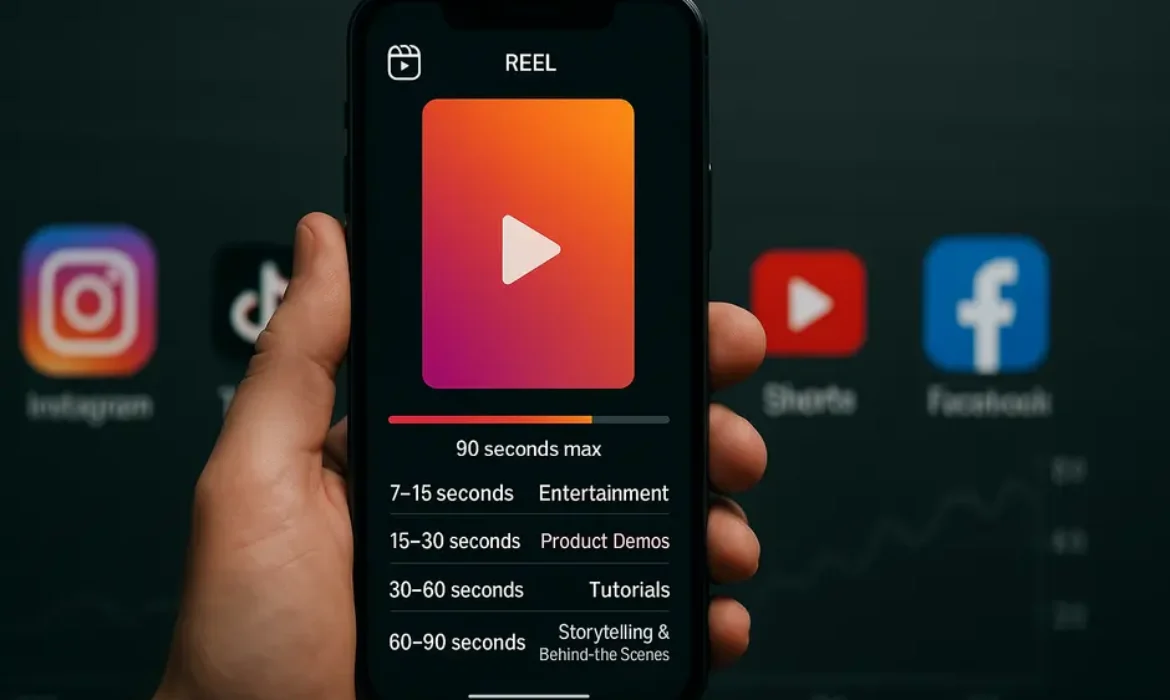
Instagram Reels can now be up to 90 seconds long. This represents the maximum duration you can create when producing new content through the platform’s native camera or when uploading pre-recorded vertical video content.
This 90-second limit applies uniformly across all account types—personal profiles, creator accounts, and business pages alike. Whether you’re filming directly within the Instagram app or uploading edited content from external video editing software, the same time constraint applies.
The extension to 90 seconds marked a significant shift in Instagram’s approach to short-form video. The platform recognized that creators needed more flexibility to tell complete stories, demonstrate products, or deliver educational content without fragmenting their message across multiple clips.
For brands and content creators, this additional time creates opportunities that weren’t possible with the original 15-second format. You can now include proper introductions, develop narrative arcs, and add comprehensive calls-to-action—all within a single reel.
A Brief History of Reels Length Evolution
Understanding how we arrived at the current 90-second limit provides valuable context for anyone developing a mobile-first content strategy on Instagram.
The Launch: 15 Seconds (August 2020)
When Instagram first introduced Reels in August 2020, the feature was clearly positioned as a direct response to TikTok’s explosive growth. The initial Instagram reels length was capped at just 15 seconds, mirroring TikTok’s original format and emphasizing snappy, highly engaging content.
This constraint forced creators to develop tight, punchy videos that captured attention immediately. The 15-second format favored quick transitions, trending audio clips, and visual hooks that could stop mid-scroll browsing.
First Expansion: 30 Seconds (September 2020)
Just one month after launch, Instagram doubled the reel length to 30 seconds. This adjustment came after creator feedback indicated that 15 seconds was too restrictive for many content types, particularly tutorials, before-and-after transformations, and product demonstrations.
The 30-second format remained the standard for nearly a year, allowing Instagram to refine the feature’s algorithm and user interface while observing how creators adapted to the format.
Second Expansion: 60 Seconds (July 2021)
In July 2021, Instagram extended the maximum reel length to 60 seconds. This change aligned Instagram more closely with TikTok, which had already expanded to allow one-minute videos.
According to data from social media analytics platforms, the 60-second limit opened doors for more substantial storytelling. Educational content, comedy sketches with complete narrative structures, and comprehensive product reviews became viable within a single reel.
Current Standard: 90 Seconds (Early 2022-Present)
The expansion to 90 seconds arrived in early 2022, giving creators an additional 50% more time compared to the 60-second limit. Instagram announced this change through its creator channels, emphasizing the platform’s commitment to supporting diverse content formats.
This evolution reflects broader shifts in how platforms approach short-form video. The definition of “short-form” has expanded as audiences demonstrate willingness to watch longer mobile content when it delivers value.
| Time Period | Maximum Reel Length | Key Changes |
|---|---|---|
| August 2020 | 15 seconds | Initial launch |
| September 2020 | 30 seconds | First expansion, doubled original limit |
| July 2021 | 60 seconds | Major expansion, aligned with TikTok |
| Early 2022–Present | 90 seconds | Current standard, maximum flexibility |
How Instagram Reels Length Compares to Other Platforms
The competitive landscape of vertical video format platforms continues to evolve, with each platform making strategic decisions about content length that reflect their unique positioning and audience expectations.
TikTok
TikTok currently allows videos up to 10 minutes long for most users, though the platform built its reputation on 15 to 60-second clips. This dramatic expansion to 10 minutes represents TikTok’s ambition to compete with YouTube for longer-form content while maintaining its short-form DNA.
Despite this technical capability, TikTok’s algorithm still tends to favor shorter content in many categories. The platform’s “For You” feed prioritizes completion rate, which naturally advantages videos that viewers watch in their entirety.
YouTube Shorts
YouTube Shorts maintains a stricter limit of 60 seconds maximum. This constraint positions Shorts as YouTube’s pure short-form offering, distinct from the platform’s traditional longer videos.
Interestingly, YouTube has resisted expanding this limit, likely to maintain clear differentiation between Shorts and regular YouTube uploads. The 60-second cap forces creators to develop genuinely short-form content rather than simply uploading excerpts of longer videos.
Snapchat Spotlight
Snapchat’s Spotlight feature allows videos up to 60 seconds as well, though the platform recommends content between 5 and 30 seconds for optimal performance. Snapchat’s younger demographic tends to prefer even briefer content than other platforms.
Facebook Reels
Facebook Reels, leveraging Meta’s integration across platforms, also supports up to 90 seconds, matching Instagram’s current limit. This consistency across Meta properties makes it easier for creators to cross-post content without modification.
| Platform | Maximum Length | Sweet Spot for Engagement |
|---|---|---|
| Instagram Reels | 90 seconds | 7-30 seconds |
| TikTok | 10 minutes | 15-60 seconds |
| YouTube Shorts | 60 seconds | 15-45 seconds |
| Snapchat Spotlight | 60 seconds | 5-30 seconds |
| Facebook Reels | 90 seconds | 15-30 seconds |
What Length Works Best for Different Content Types
While Instagram provides up to 90 seconds, the optimal ig reel length varies dramatically based on your content category, target audience, and strategic objectives.
Entertainment and Comedy (7-15 seconds)
Quick jokes, reaction videos, and entertaining clips perform exceptionally well in the 7 to 15-second range. This brevity matches the snackable content consumption patterns that define social media browsing.
The punch line arrives before attention wavers, and viewers can easily watch multiple times—a behavior that signals high engagement to Instagram’s algorithm. Creators like comedians and entertainers often find their highest reach with these ultra-short formats.
Product Demonstrations (15-30 seconds)
Showcasing a product’s key feature or demonstrating a quick use case fits naturally into 15 to 30 seconds. This timeframe allows you to establish the problem, present your product as the solution, and include a call-to-action without losing viewer interest.
E-commerce brands frequently report that this length provides the optimal balance between information density and completion rates. You can show the product in action while maintaining the snappy pacing that short-form video demands.
Tutorials and How-Tos (30-60 seconds)
Educational content that walks viewers through a process typically requires 30 to 60 seconds. Recipe videos, makeup tutorials, DIY projects, and technical tips often need this expanded timeframe to be genuinely useful.
While you might compress a tutorial into 15 seconds through aggressive editing and fast motion, the 30 to 60-second range allows for clearer instruction. Viewers who intentionally seek educational content demonstrate higher tolerance for longer reels when the content delivers clear value.
Storytelling and Behind-the-Scenes (60-90 seconds)
Narrative content, day-in-the-life videos, and behind-the-scenes glimpses benefit from the full 60 to 90-second range. This format allows character development, emotional arcs, and contextual details that make storytelling compelling.
Personal brands and lifestyle influencers often leverage longer reels to build deeper connections with their audience. The extended time creates space for personality to emerge, which drives the parasocial relationships that fuel influencer success.
Trending Audio and Challenges (7-15 seconds)
When participating in viral trends or audio challenges, matching the typical length of other creators using that sound often yields better results. Most trending audio clips run 7 to 15 seconds, and the algorithm may favor reels that align with established patterns for that particular trend.
| Content Type | Recommended Length | Why This Works |
|---|---|---|
| Comedy/Entertainment | 7-15 seconds | Quick payoff, high rewatch value |
| Product Demos | 15-30 seconds | Shows value without overstaying |
| Tutorials | 30-60 seconds | Enough time for clear instruction |
| Storytelling | 60-90 seconds | Allows narrative development |
| Trend Participation | 7-15 seconds | Matches established patterns |
Technical Specifications Beyond Length
While reels length dominates most discussions, several other technical specifications significantly impact content quality and performance.
Aspect Ratio Requirements
Instagram Reels are designed for the vertical video format with a 9:16 aspect ratio. This mobile-first orientation fills the entire screen on smartphones, creating an immersive viewing experience that square or landscape videos cannot match.
While Instagram technically accepts other aspect ratios, content that doesn’t conform to 9:16 displays with black bars on the sides or top and bottom, significantly reducing visual impact and likely decreasing engagement.
Resolution and Quality Standards
Instagram recommends uploading Reels at 1080 x 1920 pixels for optimal quality. The platform compresses videos during upload, so starting with high-resolution source material helps maintain clarity after processing.
Recording in 4K and exporting at 1080p often produces better final results than recording directly at 1080p, as the downscaling process can enhance sharpness and detail.
File Size and Format
Instagram accepts MP4 and MOV file formats for Reels uploads. While the platform doesn’t publish explicit file size limits, keeping uploads under 4GB ensures smoother processing and reduces the chance of upload failures.
The H.264 codec with AAC audio provides the best balance between quality and compatibility across devices and connection speeds.
Frame Rate Considerations
A frame rate of 30 frames per second (fps) is standard and recommended for most Reels content. Some creators use 60fps for ultra-smooth motion in action sequences or sports content, though this higher frame rate increases file size and may not display consistently across all devices.
Lower frame rates like 24fps can create a more cinematic feel but may appear slightly choppy on mobile devices where viewers expect the smoothness of 30fps or higher.
How Reel Length Affects Algorithm Performance
Instagram’s algorithm doesn’t inherently favor shorter or longer reels, but length indirectly influences the metrics that the algorithm prioritizes.
Completion Rate Dynamics
The algorithm heavily weights completion rate—the percentage of viewers who watch your reel all the way through. Mathematically, shorter reels have an advantage here. A 10-second reel requires less commitment than a 90-second reel, making complete views more likely.
However, this doesn’t mean you should artificially truncate content. A 90-second reel that captivates viewers from start to finish will outperform a 15-second reel that loses attention halfway through. The key is matching length to content quality and audience expectations.
Watch Time and Engagement Depth
While completion rate matters, Instagram also considers total watch time. A 60-second reel that people watch completely generates more watch time than a 15-second reel with the same completion rate.
Platforms increasingly recognize that deeper engagement—even on fewer pieces of content—indicates quality. A viewer who spends 90 seconds watching your reel and then visits your profile signals stronger interest than someone who watches three 10-second reels passively.
The Rewatch Effect
Instagram counts replays as positive engagement signals. Highly rewatchable content often performs exceptionally well regardless of length. Comedy bits, satisfying visual sequences, and content with hidden details that reveal themselves on second viewing all benefit from the rewatch phenomenon.
Shorter reels (under 20 seconds) are inherently more rewatchable simply because the time investment is minimal. You might watch a 12-second reel three times, but you’re unlikely to immediately rewatch a 90-second reel even if you enjoyed it.
Algorithmic Testing Recommendations
Many successful creators test different lengths for similar content types and analyze performance data to identify their optimal reel length instagram audience preferences. Instagram Insights provides completion rate data that reveals where viewers drop off.
If you notice consistent drop-off at the 30-second mark across multiple reels, that signals a potential optimal length for your specific audience. Algorithm performance isn’t universal—it’s personalized to how your followers and potential new viewers engage with your content.
Best Practices for Maximizing Engagement at Any Length
Regardless of whether you create 15-second clips or 90-second mini-documentaries, certain principles consistently drive better performance.
Front-Load Your Value
The first three seconds determine whether viewers keep watching or scroll past. Open with your most compelling visual, your most intriguing statement, or an immediate demonstration of value.
Traditional narrative structures that build slowly to a climax don’t work in short-form video. The climax needs to happen immediately, or at minimum, be clearly promised in those crucial opening moments.
Optimize for Sound-Off Viewing
According to various studies on social media consumption patterns, significant percentages of users browse Instagram with sound off, particularly in public spaces or work environments. Text overlays, captions, and visually clear narratives ensure your content communicates effectively even without audio.
This doesn’t mean audio is unimportant—trending sounds significantly boost discoverability—but your visual storytelling should stand alone.
Strategic Use of Captions and Text
On-screen text serves multiple functions: it accommodates sound-off viewing, emphasizes key points, and creates visual interest. However, overwhelming viewers with too much text creates cognitive overload.
Strategic text placement that guides attention without cluttering the frame strikes the ideal balance. Ensure text remains on screen long enough to read comfortably, typically requiring 1-2 seconds per short sentence.
Hook, Value, and CTA Structure
Effective reels typically follow a three-part structure regardless of total length:
- Hook (first 1-3 seconds): Capture attention with a question, visual surprise, or compelling statement
- Value (middle section): Deliver the promised entertainment, information, or insight
- Call-to-Action (final 2-5 seconds): Direct viewers to follow, comment, visit your profile, or take another specific action
This structure scales from 15 seconds to 90 seconds by adjusting how much depth you include in the value section.
Leverage Pattern Interrupts
Attention naturally wavers over time. Strategic edits, scene changes, text appearances, or visual effects every 3-5 seconds create pattern interrupts that re-engage wandering attention.
These don’t need to be jarring transitions—even subtle changes in camera angle or background maintain cognitive engagement more effectively than static shots.
Test and Analyze Performance Data
Instagram Insights provides detailed metrics on how your reels perform. Pay particular attention to:
- Average watch time: Shows how long viewers typically engage
- Reach: Indicates how widely Instagram distributed your content
- Engagement rate: Reveals how often viewers like, comment, share, or save
- Sources: Shows whether traffic came from followers, Explore, hashtags, or other sources
Patterns in this data reveal what your specific audience responds to regarding length, style, and content type.
Frequently Asked Questions
How long is a reel on Instagram compared to TikTok?
Instagram Reels can be up to 90 seconds long, while TikTok currently allows videos up to 10 minutes. However, despite TikTok’s longer maximum length, both platforms built their reputations on short-form content between 15 and 60 seconds. The practical sweet spot for engagement on both platforms remains in the 15 to 30-second range for most content categories, even though the technical capabilities extend much further.
Can I make Instagram Reels longer than 90 seconds?
No, 90 seconds represents the hard limit for Instagram Reels at this time. If you have longer content you want to share on Instagram, you have several alternatives: post it as a standard video to your feed (which allows up to 60 minutes), upload it to IGTV, or break the content into multiple sequential reels. Some creators effectively use series formats where they number reels (Part 1, Part 2, etc.) to deliver longer narratives across multiple posts.
What is the minimum length for Instagram Reels?
Instagram doesn’t enforce a strict minimum length for Reels, but the practical minimum is around 1-2 seconds. Extremely short reels (under 5 seconds) may struggle with algorithmic distribution because they provide limited engagement time. The platform’s editing interface and most strategic content approaches make 7-10 seconds a more realistic minimum for content that performs well.
Do longer reels get more or less reach than shorter ones?
Length itself doesn’t directly determine reach—content quality, engagement rate, and completion rate matter more. However, length indirectly affects these metrics. Shorter reels often achieve higher completion rates simply because they require less time commitment, which can boost algorithmic distribution. Conversely, longer reels that maintain engagement throughout signal exceptionally high quality to the algorithm. The optimal strategy involves matching length to content type rather than defaulting to always short or always long.
Should I always use the full 90 seconds available?
Absolutely not. Use only as much time as your content genuinely needs. A compelling 15-second reel vastly outperforms a 90-second reel with 75 seconds of filler. The additional length Instagram provides creates flexibility for content that benefits from extended time, but forcing content to fill the available space typically decreases quality and engagement. Let your message determine length rather than letting arbitrary length constraints determine your message.
How long should my Instagram Reels be for business accounts?
Business accounts should apply the same length principles as creators: match duration to content type and value delivery. Product demonstrations often work best at 15-30 seconds, tutorial content may need 30-60 seconds, and brand storytelling might use the full 60-90 seconds. The key difference for business accounts is maintaining focus on conversion objectives. Every second should either build brand awareness, demonstrate product value, or move viewers toward a conversion action. Test different lengths with similar content and analyze which drives better business results—follower growth, website clicks, or sales.
Does Instagram favor certain reel lengths in the algorithm?
Instagram’s algorithm doesn’t explicitly favor specific lengths, but it does prioritize metrics that correlate with length. The algorithm values completion rate, total watch time, replays, and engagement. Shorter reels naturally achieve higher completion rates, while longer reels that hold attention generate more watch time. Rather than favoring a particular length, the algorithm rewards content that maximizes these engagement metrics at whatever length the creator chooses. This is why the same creator might see a 12-second reel and a 75-second reel both perform exceptionally well if each optimally delivers its specific content type.
Final Thoughts
Instagram Reels can be up to 90 seconds long, but this technical maximum shouldn’t dictate your content strategy. The most successful creators on the platform understand that optimal reel length varies based on content type, audience preferences, and strategic objectives.
The evolution from 15 seconds to 90 seconds reflects Instagram’s recognition that different messages require different timeframes. Quick entertainment thrives at 7-15 seconds. Product demonstrations find their sweet spot around 20-30 seconds. Tutorials and educational content often need 45-60 seconds. Storytelling and narrative content can justify the full 90-second canvas.
Rather than asking “how long should my reels be,” ask “how long does this specific content need to deliver maximum value?” Let substance determine length, not arbitrary rules or assumptions about algorithm preferences.
The data consistently shows that engagement quality matters more than content length. A 20-second reel that viewers watch completely, rewatch, share, and comment on will always outperform a 90-second reel that loses attention at the 15-second mark.
As you develop your Instagram content strategy, focus on these principles: front-load value, maintain tight pacing, optimize for both sound-on and sound-off viewing, and ruthlessly edit anything that doesn’t serve your core message. Whether that results in a 12-second clip or an 85-second mini-story, you’ll create content that resonates with your audience and performs well within Instagram’s algorithm.
The vertical video format continues to dominate mobile-first content consumption, and Instagram Reels remains one of the most powerful tools for reaching new audiences. Understanding length options and best practices positions you to maximize this opportunity regardless of your niche, audience size, or content style.
Test different approaches, analyze your performance data, and let your results guide your strategy. The perfect reel length isn’t a universal number—it’s whatever works best for your unique content and audience.