
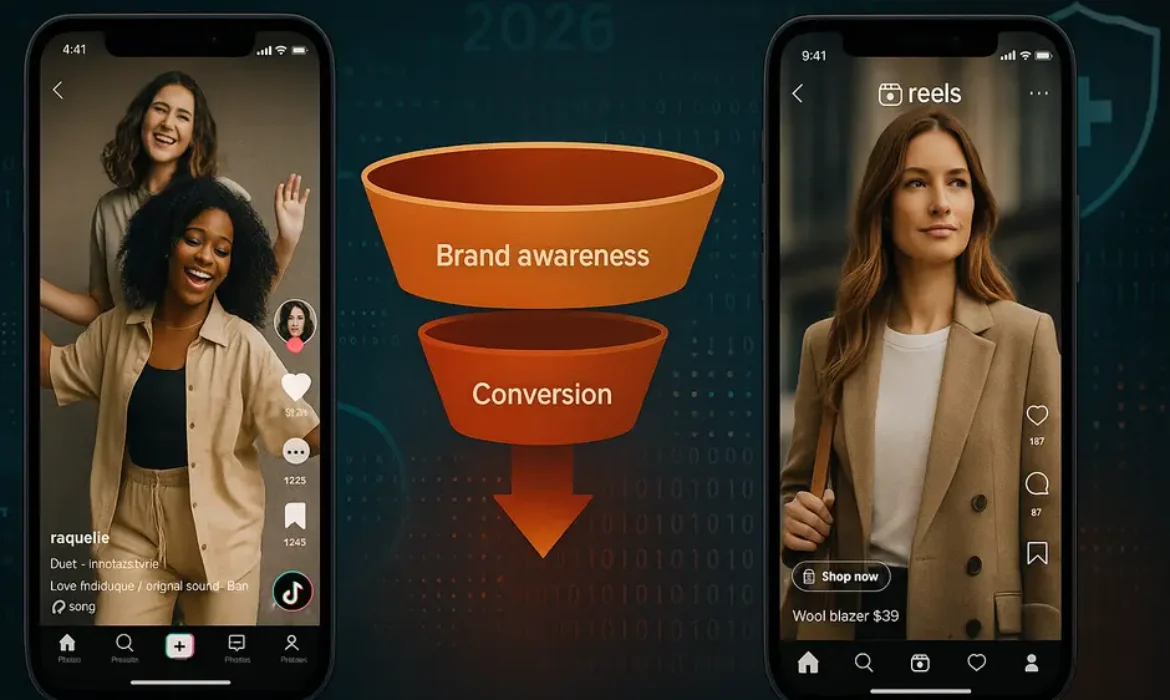
TikTok vs Instagram Reels: Which Platform Grows Your Brand Faster in 2026?
Estimated reading time: 14 minutes
Why This Comparison Still Matters in 2026
Short-form video has permanently reshaped how brands communicate. That is not hyperbole — it is the reality of consumer behavior in the mid-2020s. What began as a novelty format has become the dominant mode of brand discovery, community-building, and direct purchase influence across almost every industry vertical.
Yet for brand managers, marketing directors, and founders trying to allocate limited resources, the question remains frustratingly unresolved: should your brand be investing energy into TikTok, into Instagram Reels, or both?
The answer is more nuanced than most platform comparison articles acknowledge. TikTok and Instagram Reels are not simply two versions of the same product. They have distinct algorithms, entirely different audience psychologies, separate monetization ecosystems, and meaningfully different risk profiles for brands. Treating them as interchangeable is one of the most common and costly mistakes in social media strategy today.
This article cuts through the surface-level comparisons. Drawing on platform data, documented case studies, and firsthand strategic patterns, it gives you a clear, grounded framework for deciding where your brand should place its bets — and how to extract maximum value from whichever platform you prioritize.
Platform Overview: Where Each One Stands Today
Before comparing them head-to-head, it helps to understand where TikTok and Instagram actually are as platforms in 2026.
TikTok has crossed 1.8 billion monthly active users globally, cementing its position as one of the top five social platforms by active user base. After years of regulatory uncertainty, particularly in the United States, TikTok has navigated its ownership and compliance challenges sufficiently to remain a dominant force in Western markets. Its core identity remains the same: an entertainment-first, discovery-led platform where content from unknown accounts can reach millions of people without any prior following.
Instagram Reels, embedded within the broader Instagram ecosystem of 2.4 billion monthly active users, has evolved from a defensive response to TikTok into a genuinely capable short-form video product. Meta has poured substantial engineering and monetization resources into Reels since its launch, and the feature now commands a significant share of time spent on Instagram. Crucially, Reels does not stand alone — it integrates directly with Instagram Shopping, Stories, Direct Messages, and the broader Meta advertising suite.
Neither platform is losing ground in any meaningful sense. Both are growing. The question for your brand is not which platform is “winning” — it is which platform aligns with your specific goals.
Audience Demographics: Who’s Actually Watching
| Demographic Factor | TikTok | Instagram Reels |
|---|---|---|
| Largest age group | 18–24 (38%) | 25–34 (31.7%) |
| Second largest age group | 25–34 (32%) | 18–24 (29%) |
| Gender split | Slightly female-skewed (54/46) | Roughly equal (51/49) |
| Household income (US) | Indexed lower for high-income brackets | Stronger presence of $75k+ earners |
| Primary user mindset | Discovery and entertainment | Connection, aspiration, and shopping |
| Global reach | Stronger in Southeast Asia, emerging markets | Stronger in Western Europe, North America, Latin America |
Source: Statista Social Media Demographics 2025
What this table tells you is significant. TikTok reaches younger users who are browsing for entertainment, often without a specific purchase intent. They can be converted, but the journey typically requires more touchpoints. Instagram Reels users, while slightly older on average, enter the platform with a greater orientation toward lifestyle aspiration and, critically, shopping.
For a beauty brand, a fashion label, or a consumer goods company with strong visual storytelling, this demographic nuance matters enormously. For a B2B software company trying to reach decision-makers, neither platform is a natural fit — but Instagram edges ahead simply because its audience skews older and more professionally established.
That said, TikTok’s Gen Z and younger millennial users represent extraordinary long-term brand value. Habits formed now will drive purchasing decisions for decades. Brands that are patient and strategic enough to build genuine TikTok communities today are investing in tomorrow’s loyal customers.
Organic Reach and the Algorithm Explained
This is where TikTok’s competitive advantage has historically been — and where it remains strongest in 2026.
TikTok’s algorithm is built around content performance, not social graphs. When you post on TikTok, your content is initially served to a small test audience. If that audience engages — watches through, shares, comments, saves — the algorithm expands distribution progressively. A brand account with 200 followers can go viral on TikTok. That is not an occasional miracle; it is a structural feature of how the platform works.
Instagram’s algorithm, by contrast, is more relationship-weighted. Reels do receive discovery-oriented distribution beyond your followers, and Meta has invested in improving this significantly. But Instagram’s default gravity pulls toward content from accounts users already follow or have interacted with. The For You-style feed in Reels is genuinely competitive, but it operates within a system that still rewards established accounts over unknown ones.
For brands launching from scratch or entering new markets, TikTok’s organic reach advantage is real and practically significant. According to data published by Social Insider, TikTok’s median organic reach rate remains roughly three to four times higher than Reels for accounts under 100,000 followers.
For established brands with large, engaged Instagram followings, Reels makes it easier to leverage existing equity. You are not starting from zero — you are amplifying to an audience that already knows and trusts you.
The takeaway for brand strategy is this: if organic reach is your primary growth lever and you are starting with limited brand awareness, TikTok offers a faster runway. If you have an established Instagram presence and want to deepen engagement and drive conversions, Reels is the more efficient vehicle.
Engagement Rates: What the Numbers Actually Tell You
Engagement rate is one of those metrics that gets cited constantly and interpreted poorly. Raw engagement numbers are less useful than contextual ones — who is engaging, with what intent, and what happens next.
With that caveat stated clearly, the data still tells an interesting story.
| Metric | TikTok (Average) | Instagram Reels (Average) |
|---|---|---|
| Average engagement rate | 5.96% | 3.79% |
| Video completion rate | Higher for entertaining content | Higher for informative/tutorial content |
| Comment sentiment | More conversational, community-driven | More aspirational, product-focused |
| Share behavior | Strong “share to friends” culture | Stronger save-for-later behavior |
| Click-through to profile/bio | Lower | Higher |
TikTok’s engagement rates are higher, but the nature of that engagement differs from Instagram’s. TikTok users engage through participation — duets, stitches, sound repurposing, comment chains. This creates a participatory culture around brand content that can generate enormous earned reach and brand awareness.
Instagram Reels engagement, while lower in raw percentage terms, tends to correlate more directly with purchase intent behavior. Users saving Reels are often bookmarking products or ideas for future reference. Tap-throughs to profiles convert to link clicks and product page visits at a higher rate than TikTok’s profile traffic. For brands with e-commerce infrastructure, this distinction matters a great deal.
Brand Awareness vs. Direct Conversion
Think about your marketing funnel in two phases: the top, where people discover and learn about your brand, and the bottom, where they make decisions and purchase. TikTok and Instagram Reels each have a natural home in this funnel.
TikTok is a top-of-funnel powerhouse. Its entertainment-first culture, combined with aggressive organic reach, makes it exceptional for brand awareness. Brands like Duolingo, Ryanair, and Rhode Skin have demonstrated that TikTok-native content strategies can build mass cultural awareness at a fraction of the cost of traditional advertising. These brands did not just advertise on TikTok — they became part of its culture. That is a meaningful distinction.
Instagram Reels performs better at mid-to-lower funnel stages. The integration with Instagram Shopping allows brands to tag products directly in Reels, enabling a seamless path from content discovery to product page to checkout — all within a single platform. For direct-to-consumer brands, this is a significant structural advantage. Meta’s advertising infrastructure also gives brands far more granular control over retargeting, lookalike audiences, and purchase-event optimization than TikTok currently offers.
A practical example: a skincare brand launching a new product might use TikTok to seed awareness through creator partnerships and entertaining content, then capture that warm audience on Instagram through shoppable Reels and targeted Ads. This two-platform funnel approach is how sophisticated DTC brands are operating in 2026 — not choosing between TikTok and Reels, but assigning each platform a specific role.
TikTok for Business: Strengths and Limitations
TikTok has developed a notably mature business ecosystem since the early years of its growth. The TikTok for Business platform now includes sophisticated ad formats (TopView, Branded Hashtag Challenges, In-Feed Ads), robust analytics, a Creator Marketplace for influencer discovery, and shopping integrations through TikTok Shop.
Strengths for brands:
- Unmatched organic discovery potential, particularly for content-forward brands
- TikTok Shop has matured into a genuine e-commerce channel, particularly in Southeast Asia and, increasingly, in the US and UK
- Younger audience demographic is highly responsive to authentic, personality-driven content
- Branded sound and music integration creates unique opportunities for brand recall
- The Creator Marketplace offers transparent performance data and direct collaboration tools
Limitations brands should understand:
- Ad targeting is less sophisticated than Meta’s, particularly for niche B2B or high-value customer segments
- Brand safety controls, while improved, remain more variable than on Instagram
- TikTok Shop adoption is still building in Western markets — it works, but the infrastructure is newer
- Regulatory environment continues to evolve, creating some degree of strategic uncertainty for long-term investment
- Content production demands are high — TikTok culture rewards volume and authenticity, which requires consistent creative output
Instagram for Business Video: What Reels Offers Brands
Instagram has spent several years positioning Reels not just as a content format but as a full-stack business tool. For brands already operating within the Meta ecosystem, this integration creates compounding advantages.
Strengths for brands:
- Direct integration with Instagram Shopping and Meta’s advertising infrastructure
- Broader age demographic means more reach among consumers with established purchasing power
- Reels content can be cross-promoted to Stories, the Feed, and distributed as Meta Ads without separate creative production
- Meta’s advertising platform remains best-in-class for audience targeting, retargeting, and conversion optimization
- Creator Marketplace integration allows brands to manage influencer partnerships and track performance within the platform
- More robust brand safety tools and community standards enforcement
Limitations to keep in mind:
- Organic reach for new accounts is more limited compared to TikTok
- The platform’s entertainment culture is less developed — content that feels overly “produced” can underperform
- Reels algorithm updates have been inconsistent, causing some brands to experience reach volatility
- Competition for attention is fierce — Instagram users are exposed to content from a broader range of formats (Stories, Feed, DMs) which fragments attention
Influencer Partnerships and Creator Marketplaces
Influencer marketing on both platforms has professionalized enormously. Gone are the days of informal DM negotiations and rough performance guesswork. Both TikTok and Instagram now offer native creator marketplace tools that allow brands to search creators by niche, audience demographics, engagement benchmarks, and past campaign performance.
TikTok Creator Marketplace gives brands access to detailed analytics for creator accounts before committing to partnerships, including real audience demographics (not self-reported), average views, engagement rates, and follower growth trends. TikTok also offers Spark Ads, which allow brands to amplify organic creator content as paid ads — a particularly effective tool because it preserves the authentic feel of organic posts while adding paid distribution power.
Instagram’s Creator Marketplace operates within Meta Business Suite and connects to the broader paid amplification infrastructure. Branded Content Ads on Instagram work similarly to Spark Ads, letting brands run creators’ organic posts as targeted advertisements. Instagram’s advantage here is the ability to layer sophisticated Meta audience targeting on top of creator content — reaching not just the creator’s followers, but custom audiences built from your own customer data.
For brands evaluating influencer partnerships, the decision often mirrors the broader platform choice. If brand awareness and cultural credibility are the goal, TikTok creators — with their participatory audiences and higher organic reach — typically deliver stronger results. If conversion and direct ROI are the priority, Instagram creator partnerships, with their shoppable infrastructure and Meta retargeting capabilities, often show clearer attribution.
Brand Safety Considerations
Brand safety deserves honest discussion because it is often underweighted in platform comparison analyses.
TikTok has made substantial investments in brand safety tools, including keyword exclusion lists, content category controls, and third-party verification partnerships. However, the platform’s open, entertainment-first environment means that brand adjacency — the content appearing before and after your ads — is harder to control than on more structured platforms. Brands operating in sensitive categories (financial services, healthcare, regulated consumer goods) have encountered challenges with TikTok’s compliance framework.
Instagram’s brand safety environment is generally considered more stable and controlled, benefiting from Meta’s longer track record with brand advertisers and its more developed content moderation infrastructure. Instagram’s community standards, while imperfect, are more consistently applied and better understood by brand legal and compliance teams.
This does not mean TikTok is unsafe for brand advertising — major global brands run successful campaigns on the platform every day. It means that brands with strict compliance requirements, regulated industries, or conservative risk profiles should factor brand safety infrastructure into their platform decision, not just audience reach and engagement numbers.
Which Platform Should Your Brand Choose?
There is no universal answer, but there is a logical framework.
Choose TikTok as your primary platform if:
- You are a consumer-facing brand targeting audiences under 30
- Brand awareness and cultural relevance are your primary objectives
- You have (or can develop) creative capacity for consistent, high-volume authentic content
- You are in a category where entertainment value drives discovery — fashion, beauty, food, fitness, gaming, music
- You are willing to invest in organic community-building over a 6–12 month runway
Choose Instagram Reels as your primary platform if:
- You have an established Instagram following you want to deepen and monetize
- Direct-to-consumer sales and measurable ROI are your primary metrics
- Your audience trends 25 and older
- You operate in a category where aspirational lifestyle content drives purchase — home decor, travel, premium fashion, wellness
- You rely on paid media and need sophisticated targeting and attribution tools
Build a presence on both if:
- You have the creative and operational capacity to produce platform-native content for each
- You want to use TikTok for awareness and Instagram for conversion (the funnel approach described earlier)
- You are a growing brand that can afford to test and learn across channels simultaneously
The brands consistently winning in 2026 are not mono-platform strategies. They are brands that understand the distinct role of each platform and create content that honors that role — rather than simply cross-posting the same video everywhere and hoping for the best.
Key Takeaways
-
- TikTok still delivers stronger organic reach for new brands, but Instagram Reels offers superior conversion infrastructure through Instagram Shopping
- Audience demographics differ significantly — TikTok skews younger and discovery-driven, while Reels audiences trend slightly older and purchase-ready
- Engagement rates on TikTok remain higher on average, but Instagram provides a more brand-safe environment with tighter ad controls
- The best strategy for most brands in 2026 is not choosing one over the other — it is understanding which platform serves which stage of your funnel
- Creator partnerships on both platforms have matured dramatically, with TikTok’s Creator Marketplace and Instagram’s Creator Marketplace offering measurable ROI tools
FAQs
1. Is TikTok still worth investing in for brands given ongoing regulatory uncertainty?
Yes, and here is why. Despite years of legislative scrutiny in the United States and periodic concerns in other markets, TikTok has consistently demonstrated resilience. With 1.8 billion monthly active users and a user base that has shown strong platform loyalty, the cost of abandoning TikTok strategy out of regulatory caution is typically higher than the risk of that uncertainty materializing. Smart brands maintain platform-agnostic content assets — meaning they own the underlying creative and audience data — while distributing across TikTok. This mitigates risk without forfeiting reach. Watch the regulatory environment, absolutely. But absence from TikTok in 2026 is itself a strategic risk.
2. Which platform delivers better ROI for small businesses with limited budgets?
For small businesses with tight budgets, TikTok’s organic reach advantage makes it more cost-efficient for brand awareness. A single well-crafted video from an account with minimal following can reach hundreds of thousands of relevant users without paid amplification — something that has become increasingly rare on Meta platforms. However, if your primary goal is driving immediate sales and you have a strong product with visual appeal, Instagram Reels combined with a modest paid budget can deliver faster, more measurable returns through Shopping integration. The honest answer is to test both with organic content for 60 days, measure which drives more meaningful traffic and engagement for your specific audience, and allocate budget accordingly.
3. Should brands post the same content on TikTok and Instagram Reels?
Not without adaptation. Cross-posting identical content is a common shortcut that routinely underperforms on both platforms. TikTok content thrives when it feels native to TikTok — informal, personality-led, often trending-audio-driven, and built around the platform’s participatory culture. Instagram Reels content can be slightly more polished and lifestyle-oriented, and it benefits from strategic product tagging and call-to-action placement. A better workflow is to produce core content concepts and then adapt execution for each platform’s culture and technical specifications. This is more work, but the performance differential justifies it consistently.
4. How do engagement rates on TikTok and Instagram Reels compare across different industries?
Engagement rates vary significantly by industry on both platforms. On TikTok, entertainment, beauty, fashion, and food categories consistently outperform platform averages, with some niche creators in these spaces achieving 10%+ engagement rates. On Instagram Reels, lifestyle, travel, home design, and fitness categories tend to perform best. B2B categories underperform on both platforms relative to consumer categories, though thought leadership content from individual executives can build valuable professional audiences on Instagram specifically. Regardless of industry, video completion rate is the metric most strongly correlated with algorithmic distribution on both platforms — prioritizing hook quality and content pacing over production value alone.
5. What role does TikTok Shop play for brands in 2026, and how does it compare to Instagram Shopping?
TikTok Shop has grown aggressively and is now a meaningful e-commerce channel, particularly for impulse-purchase categories like beauty, fashion accessories, and consumer electronics. In Southeast Asia, TikTok Shop processes billions of dollars in GMV annually. In the US and UK, adoption has grown steadily, though Instagram Shopping still maintains a broader established base of brand merchants and a more mature customer checkout experience. The key difference is friction: Instagram Shopping benefits from Meta’s more developed payment infrastructure and a user base more accustomed to in-app purchase behavior. TikTok Shop’s advantage is its integration with viral content — when a product goes viral organically, the path to purchase is immediate. Brands with the capacity to manage both should consider running parallel storefronts and comparing performance by product category.
6. How important is posting frequency on each platform?
Posting frequency matters on both platforms, but it matters differently. TikTok’s algorithm rewards consistency and volume — brands posting three to five times per week typically see stronger cumulative reach growth than those posting once or twice. This is partly because TikTok distributes each piece of content independently, so more posts mean more distribution opportunities. Instagram Reels are more quality-weighted — posting one exceptional Reel per week often outperforms four mediocre ones because Instagram’s algorithm factors in account-level engagement history more heavily. For resource-limited teams, this means TikTok demands higher creative output volume while Instagram rewards investment in fewer, higher-quality executions.
7. Can older or more traditional brands succeed on TikTok, or is it mainly for youth-oriented categories?
Some of the most surprising TikTok success stories come from brands that have no obvious youth appeal — including B2B software companies, financial education accounts, law firms, and heritage food brands. The common thread is not youth-targeted content; it is content that entertains, educates, or creates genuine curiosity. TikTok users are not exclusively looking for youth culture — they are looking for content that holds their attention. Brands that approach TikTok with authenticity, a willingness to be less formal than their traditional marketing, and genuine respect for the platform’s culture consistently find audiences that are often surprised to discover them there. The risk for traditional brands is not irrelevance — it is inauthenticity.
Conclusion
The TikTok vs Instagram Reels debate is, at its core, a question about what you want your brand to accomplish and who you are trying to reach. Neither platform is objectively superior. Both have genuine, well-documented strengths that serve different brand objectives at different stages of growth.
What is clear in 2026 is that short-form video is not optional. The brands finding growth on social media are those treating video content as a core strategic asset, not an afterthought. Whether that means building a TikTok-first culture, maximizing Instagram’s shoppable ecosystem, or operating intelligently across both channels depends on your audience, your resources, and your goals.
The worst possible approach is paralysis. Waiting for a definitive winner that will never arrive. Pick a starting point based on where your audience actually is. Create content that fits the platform’s culture. Measure what matters to your business. Adjust. The platform that grows your brand fastest is ultimately the one you execute on with the most consistency and the most genuine understanding of why your audience is there.
For further reading on social platform algorithm behavior and brand content strategy, Google’s Search Quality Evaluator Guidelines offer useful perspective on how content quality signals translate across digital environments.