
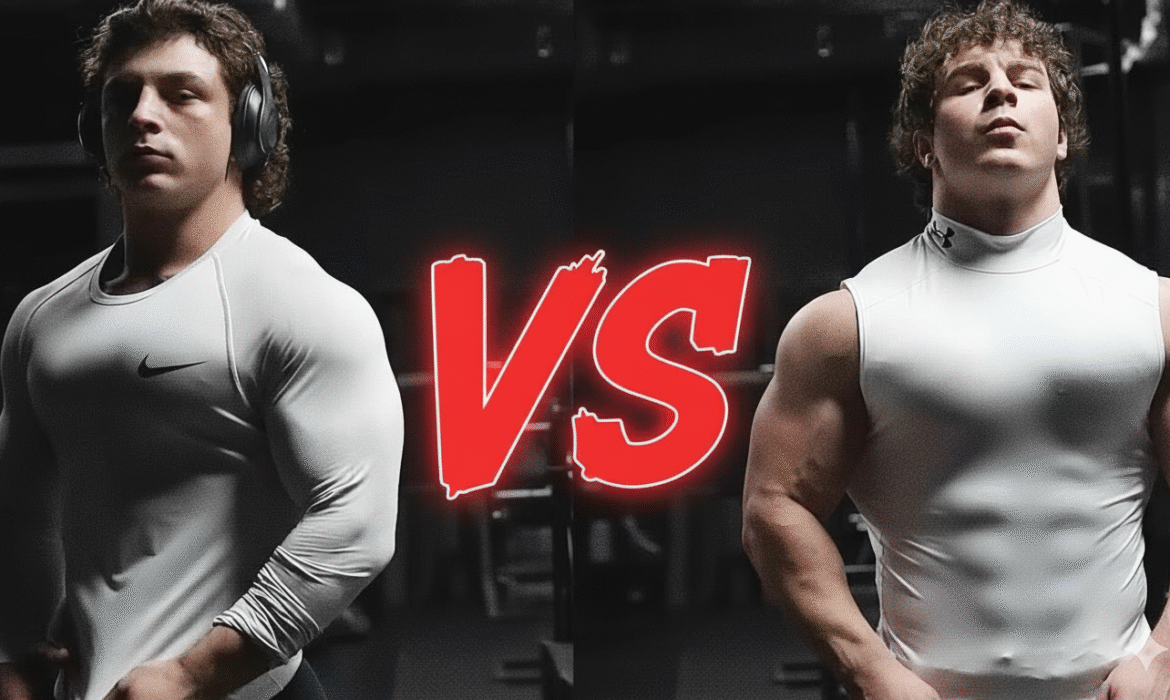
Tren Twins Strength Comparison: Who Is Stronger, Mike or Chris?
Estimated reading time: 12 minutes
Introduction
The fitness community has been captivated by the Tren Twins—Mike and Chris—since they burst onto the social media scene with their relentless training intensity and impressive physiques. As identical twins who share nearly identical genetics, their strength comparison offers a fascinating case study in how training variables, recovery protocols, and minor physiological differences can influence athletic performance.
The question “which tren twin is stronger” has sparked countless debates across YouTube comments, Reddit threads, and bodybuilding forums. This comprehensive analysis goes beyond surface-level observations to examine their actual lifting stats, body composition metrics, and gym performance data to determine who truly holds the strength advantage.
While both brothers have built impressive physiques through years of dedicated training, subtle differences in their approach to fitness, muscle development patterns, and strength profiles reveal important insights about athletic performance—even among individuals with identical genetic blueprints.
Who Are the Tren Twins?
Mike and Chris, collectively known as the Tren Twins or Tren Bros, rose to prominence through their brutally honest gym content, high-intensity training footage, and refreshingly authentic approach to fitness content creation. Unlike many fitness influencers who carefully curate their image, the twins have built a loyal following by showcasing raw training sessions, discussing both successes and setbacks, and maintaining transparency about their fitness journey.
Both brothers began their serious bodybuilding endeavors in their late teens, transforming from relatively average builds into the muscular physiques they display today. Their content focuses on heavy compound movements, progressive overload principles, and maintaining consistency over years rather than chasing quick fixes.
The twins’ popularity stems partly from their identical appearance but distinctly different personalities during training. This dynamic creates natural curiosity about whether one brother has developed physical advantages despite their shared genetics.
Physical Stats Breakdown: Mike vs Chris
Understanding the tren twins strength analysis requires examining their baseline physical measurements. While exact stats fluctuate based on their current training phase and body composition goals, here’s what we know from their disclosed information and observable evidence:
Basic Measurements
| Measurement | Mike | Chris | Difference |
|---|---|---|---|
| Height | ~5’6″ (168 cm) | ~5’6″ (168 cm) | None |
| Weight (Contest) | 170-175 lbs | 172-176 lbs | Minimal |
| Weight (Bulking) | 185-190 lbs | 183-188 lbs | 2-3 lbs |
| Body Fat % (Lean) | 8-10% | 8-9% | ~1% |
| Body Fat % (Bulk) | 12-15% | 12-14% | Negligible |
These measurements reveal what you’d expect from identical twins—remarkably similar baseline statistics. The minor weight fluctuations likely reflect daily variance, hydration status, and measurement timing rather than significant compositional differences.
Body Composition Insights
According to research published in the American Journal of Clinical Nutrition, identical twins typically maintain body composition patterns within 2-3% of each other when exposed to similar environmental factors. The Tren Twins exemplify this phenomenon, displaying nearly identical muscle mass distribution and body fat percentages throughout various training phases.
Their compact frames (both standing around 5’6″) provide biomechanical advantages for certain lifts, particularly those requiring shorter ranges of motion. This anthropometric reality partially explains their impressive strength relative to body weight.
Tren Twins Muscle Comparison: Body Composition Analysis
While overall measurements tell part of the story, examining specific muscle groups reveals more nuanced differences in the tren twins physique breakdown.
Upper Body Development
Mike’s Upper Body:
- Slightly thicker chest development, particularly in the upper pectorals
- More pronounced front delt development
- Dense tricep insertions with visible separation even at higher body fat percentages
- Back width comparable to Chris with marginally better mid-back thickness
Chris’s Upper Body:
- Superior lat width creating a more pronounced V-taper
- Better bicep peak and overall arm aesthetics
- Comparable shoulder development with slightly fuller rear delts
- Similar trap development with occasional edge during peak condition
Lower Body Analysis
The tren bros physique differences become more apparent when examining leg development:
Mike’s Lower Body:
- Solid quad development with good sweep and teardrop
- Adequate hamstring development
- Standard glute development for his training style
Chris’s Lower Body:
- Noticeably superior quad development in both mass and definition
- Better hamstring-to-quad ratio
- More developed calves with better genetic insertion points
- Overall more balanced lower body proportions
This lower body advantage for Chris translates directly into functional strength metrics, particularly in squatting variations and leg-focused compound movements.
Muscle Density and Quality
When comparing tren twins muscle density, both brothers display the hard, full muscle bellies associated with years of progressive resistance training. The quality of their muscular development suggests consistent protein intake, adequate recovery, and intelligent programming rather than sporadic intensity.
Neither twin exhibits the overly smooth appearance that sometimes accompanies rapid size gains, nor do they show the flat, depleted look of chronic under-eating. This indicates solid nutritional practices supporting their training demands.
Strength Analysis: Powerlifting Numbers and Gym Performance
Now we arrive at the core question: who demonstrates superior tren twins gym strength across measurable metrics?
Bench Press (Upper Body Pressing Strength)
Based on documented training footage and disclosed numbers:
| Lift Variation | Mike | Chris |
|---|---|---|
| Flat Barbell Bench (1RM) | 315-325 lbs | 305-315 lbs |
| Incline Barbell Bench (Working Sets) | 245 lbs x 6-8 | 235 lbs x 6-8 |
| Dumbbell Bench (Working Weight) | 110-120 lbs | 105-115 lbs |
Advantage: Mike demonstrates a consistent 5-10 pound edge across pressing variations. While this might seem minor, it represents a measurable performance difference that appears consistently across multiple training sessions.
Squat (Lower Body Strength)
| Squat Variation | Mike | Chris |
|---|---|---|
| Back Squat (1RM) | 365-375 lbs | 385-405 lbs |
| Front Squat (Working Sets) | 275 lbs x 5 | 295 lbs x 5 |
| Leg Press (Working Weight) | 700+ lbs x 10-12 | 750+ lbs x 10-12 |
Advantage: Chris shows a more substantial lead in squatting strength, with approximately 20-30 pounds separating their maximum efforts. This aligns with the observable lower body development differences noted earlier.
Deadlift (Posterior Chain Power)
| Deadlift Style | Mike | Chris |
|---|---|---|
| Conventional Deadlift (1RM) | 455-475 lbs | 465-485 lbs |
| Romanian Deadlift (Working Sets) | 315 lbs x 8 | 325 lbs x 8 |
| Trap Bar Deadlift | 495 lbs x 3 | 505 lbs x 3 |
Advantage: Chris (Slight) maintains a marginal edge, though the difference falls within the variation you’d expect from daily performance fluctuations, sleep quality, and recovery status.
Overhead Press and Olympic Lifts
Neither twin focuses heavily on Olympic lifting or maximal overhead pressing, but their training content reveals:
- Overhead Press: Mike edges out Chris by approximately 5-10 lbs (185 lbs vs 175-180 lbs)
- Clean variations: Chris demonstrates better technical proficiency and slightly higher working weights
- Snatch variations: Neither performs these regularly enough for meaningful comparison
Strength-to-Bodyweight Ratios
Looking at the tren bros lifting stats through a relative strength lens:
Mike’s Ratios (at ~180 lbs bodyweight):
- Bench: 1.75-1.80x bodyweight
- Squat: 2.0-2.1x bodyweight
- Deadlift: 2.5-2.6x bodyweight
- Total relative strength: 6.25-6.5x bodyweight
Chris’s Ratios (at ~180 lbs bodyweight):
- Bench: 1.70-1.75x bodyweight
- Squat: 2.1-2.25x bodyweight
- Deadlift: 2.6-2.7x bodyweight
- Total relative strength: 6.4-6.7x bodyweight
When examining overall powerlifting total equivalents, Chris holds a slight advantage, primarily driven by his superior squat numbers.
Chris vs Mike Tren: Training Styles and Workout Output
The tren twins lifting power doesn’t exist in isolation—it’s shaped by their distinct approaches to training despite following similar overall programs.
Mike’s Training Philosophy
- Higher frequency upper body work: Often hitting chest and shoulders twice weekly with significant volume
- Moderate rep ranges: Typically working in the 6-10 rep zone for compound movements
- Controlled tempos: Emphasizes time under tension over explosive movements
- Lower body as complementary: Trains legs thoroughly but without the same enthusiasm shown for upper body sessions
This approach has clearly optimized his upper body pressing strength while maintaining respectable lower body numbers.
Chris’s Training Philosophy
- Balanced training split: Equal enthusiasm and intensity for both upper and lower body sessions
- Wider rep range variation: Comfortable working from heavy triples up to sets of 15-20
- More explosive movements: Incorporates jump variations, plyometrics, and speed work
- Higher lower body volume: Frequently performs additional leg work beyond programmed sessions
These differences explain the diverging strength profiles despite identical genetics and similar overall programming frameworks.
Recovery and Work Capacity
The tren bros workout output also depends on recovery capacity. Both twins emphasize:
- Consistent sleep schedules (7-9 hours nightly)
- High protein intake (180-220g daily depending on phase)
- Strategic deload weeks every 4-6 weeks
- Active recovery techniques including stretching and mobility work
Chris has mentioned sleeping slightly longer on average and placing greater emphasis on post-workout nutrition timing, which may contribute to his ability to handle higher training volumes, particularly for lower body work.
Tren Twins Physique Differences: What Sets Them Apart
Beyond raw strength numbers, comparing tren twins physiques reveals aesthetic and functional differences:
Proportions and Symmetry
Mike’s Aesthetic:
- More upper-body dominant appearance
- Thicker, denser upper body creates impression of greater mass
- Classic bodybuilding proportions with emphasis on chest and delts
- Slightly less balanced overall but more impressive upper body presentation
Chris’s Aesthetic:
- More balanced overall development
- Better flow between muscle groups
- Superior leg-to-torso proportions
- More athletic appearance overall
Vascularity and Conditioning
When comparing the tren bros body comparison in terms of conditioning:
- Both achieve impressive vascularity when lean
- Mike tends to hold slightly less water, creating more visible striations when dieted down
- Chris maintains fuller muscle bellies even at lower body fat percentages
- Neither shows signs of poor muscle insertion points or major asymmetries
Posing and Presentation
Stage presence matters even for non-competitors. Mike demonstrates slightly better control in upper body poses (most muscular, front double biceps), while Chris excels in poses requiring lower body development (front relaxed, side chest).
Athletic Performance Beyond the Gym
The tren twins athletic build analysis extends beyond powerlifting metrics to functional athleticism:
Speed and Agility
Chris displays better:
- Vertical jump height (estimated 28-30 inches vs Mike’s 26-28 inches)
- Lateral movement quickness
- Sprint acceleration from a standstill
- Overall coordination in dynamic movements
This advantage likely stems from his superior lower body development and emphasis on explosive training modalities.
Endurance and Work Capacity
In conditioning-focused challenges and circuit training sessions shown on their channel:
- Mike demonstrates better upper body muscular endurance (higher rep push-up sets, longer plank holds)
- Chris shows superior cardiovascular conditioning and recovery between high-intensity intervals
- Both display above-average work capacity compared to general population bodybuilders
Sport-Specific Skills
Neither twin currently competes in formal sports, but their content reveals:
- Chris has better basketball shooting form and jumping ability
- Mike shows superior arm wrestling positioning and hand strength
- Both have average to above-average flexibility for their muscle mass
The Verdict: Which Tren Twin Is Stronger?
After examining the tren twins strength profile across multiple dimensions, the answer depends on how you define “stronger.”
If Strength Means Total Powerlifting Numbers:
Chris holds a slight advantage with an estimated powerlifting total approximately 20-30 pounds higher than Mike’s, driven primarily by his superior squat performance. His combined total across the big three lifts would place him marginally ahead in any head-to-head competition.
If Strength Means Upper Body Power:
Mike demonstrates clear superiority across all pressing variations. His consistent 5-15 pound advantage in bench press variations and slightly better overhead pressing gives him the edge for upper body-specific strength.
If Strength Means Pound-for-Pound Performance:
Chris narrowly wins when comparing strength-to-bodyweight ratios across all lifts, though the margin is minimal—within 2-3% of total relative strength output.
If Strength Means Functional Athleticism:
Chris takes this category convincingly with better explosive power, jumping ability, and overall athletic coordination beyond pure weight room performance.
The Honest Assessment
The reality is that the tren twins gym performance is remarkably similar, with each brother showing slight advantages in specific areas:
Mike’s Strengths:
- Upper body pressing movements
- Chest and shoulder development
- Static strength displays
- Upper body muscular endurance
Chris’s Strengths:
- Lower body power and development
- Overall powerlifting total
- Explosive athletic movements
- Balanced full-body strength
For most practical purposes, they’re equivalently strong with complementary specializations rather than one being definitively stronger across all metrics.
Key Takeaways
- Genetics provide the baseline, but training determines specialization: Despite identical DNA, different training emphases have created measurable performance differences
- Strength is multidimensional: Raw numbers, relative strength, explosive power, and endurance all contribute to overall strength capacity
- Sustainable progress beats temporary peaks: Both twins have built their strength over years of consistent training rather than program-hopping or chasing quick gains
- Recovery matters as much as training: Their similar commitment to sleep, nutrition, and deloading supports their ability to train intensely while avoiding injury
- Comparison drives improvement: Their friendly competition likely pushes both twins to achieve more than they would training independently
- Body composition impacts performance: Their ability to maintain relatively lean physiques year-round prevents the performance decrements associated with excessive body fat
- Authenticity resonates: Their honest approach to documenting both successful and difficult training sessions provides realistic expectations for their audience
Frequently Asked Questions
Who has better genetics, Mike or Chris Tren Twin?
This question contains a misconception—as identical twins, Mike and Chris share virtually identical genetics. Their DNA is 99.9% the same, meaning any physical differences stem from environmental factors like training variables, nutrition timing, recovery quality, sleep patterns, and minor epigenetic influences rather than genetic superiority. The subtle differences in their physiques and strength profiles demonstrate how significantly training approaches can influence outcomes even when genetics are held constant. Both have excellent genetics for building muscle and strength relative to the general population, but neither has better genetics than the other.
What are the Tren Twins’ actual lifting numbers?
Based on documented training footage and disclosed information, Mike’s approximate one-rep maxes include: bench press 315-325 lbs, squat 365-375 lbs, and deadlift 455-475 lbs. Chris’s numbers are: bench press 305-315 lbs, squat 385-405 lbs, and deadlift 465-485 lbs. These numbers fluctuate based on their training phase, body weight, recovery status, and whether they’re prioritizing strength or hypertrophy at any given time. Both twins typically train in moderate rep ranges (6-12 reps) rather than focusing exclusively on one-rep max attempts, so their true maximal strength may be slightly higher than demonstrated numbers. For their bodyweight class (typically 170-190 lbs depending on phase), these are impressive strength levels indicating years of consistent progressive overload.
How do the Tren Twins build muscle so effectively?
The Tren Twins’ muscle-building success stems from several key factors working synergistically. First, they maintain exceptional training consistency, hitting the gym 5-6 days weekly year-round without extended breaks. Second, they employ progressive overload principles, gradually increasing weights, reps, or volume over time rather than using the same loads indefinitely. Third, they consume adequate protein (approximately 1g per pound of bodyweight) alongside sufficient overall calories to support muscle growth. Fourth, they prioritize recovery through consistent sleep schedules and strategic deload weeks. Fifth, they focus primarily on compound movements (squats, deadlifts, presses, rows) that stimulate multiple muscle groups simultaneously. Finally, they’ve maintained this approach for years rather than months, allowing compound interest effects on muscle development. Their genetic advantages as individuals with favorable muscle-building genetics certainly help, but their consistency and intelligent programming deserve primary credit.
Do the Tren Twins use performance-enhancing substances?
The twins have addressed this topic directly in their content, acknowledging they don’t claim to be natural athletes. Like many competitive bodybuilders and strength athletes, they’ve been transparent about using performance-enhancing substances to achieve their physiques. This honesty differentiates them from influencers who make misleading natural claims while using such substances. However, it’s important to understand that even with pharmaceutical assistance, their results still require years of disciplined training, precise nutrition, and exceptional consistency. Performance enhancers don’t replace hard work—they enhance the results of hard work that’s already happening. For natural athletes looking to learn from the twins, their training principles, progressive overload approach, exercise selection, and recovery emphasis remain valuable regardless of enhancement status.
Which Tren Twin has the better physique for bodybuilding?
From a competitive bodybuilding perspective, this depends on the division being considered. For classic physique or bodybuilding divisions that emphasize balance and proportions, Chris likely holds an advantage due to his more balanced upper-to-lower body development and superior leg development. His better V-taper (wider lats, tighter waist) and fuller muscle bellies would score favorably with bodybuilding judges. For divisions emphasizing upper body development or where the judging criteria favor density and conditioning over proportions, Mike’s thicker chest, denser muscle insertions, and superior upper body development might perform better. Neither twin currently competes in bodybuilding, so this remains theoretical. Both have physiques that would be competitive at regional natural bodybuilding shows if they chose to pursue that path. Their current focus appears to be building social media presence and creating fitness content rather than stepping on stage.
How can I train like the Tren Twins?
Training like the Tren Twins requires adopting their principles while adjusting for your individual circumstances. Start with a foundation of compound movements: squats, deadlifts, bench press, overhead press, and rowing variations should form 60-70% of your training volume. Train each muscle group 2x per week with sufficient volume (15-20 sets per muscle group weekly). Use progressive overload by adding weight, reps, or sets gradually over time—aim to improve some performance metric every 2-4 weeks. Maintain high training intensity while using proper form—the twins push close to failure but rarely sacrifice technique for additional reps. Consume adequate protein (0.8-1g per pound bodyweight) and sufficient overall calories to support your goals. Prioritize recovery through 7-9 hours of sleep nightly and implementing deload weeks every 4-6 weeks. Most importantly, maintain consistency over months and years rather than expecting rapid transformations. Natural lifters should adjust expectations accordingly, as pharmaceutical assistance significantly impacts achievable results and recovery capacity.
What’s the Tren Twins’ diet and nutrition approach?
The Tren Twins follow a flexible but structured nutrition approach that prioritizes protein intake while adjusting carbohydrates and fats based on their current training phase. During muscle-building phases, they consume a caloric surplus of approximately 200-500 calories above maintenance, with protein around 180-220g daily, carbohydrates 300-400g, and fats 60-80g. During cutting phases, they reduce overall calories by lowering carbohydrates and fats while maintaining high protein to preserve muscle mass. They don’t follow extreme restrictive diets or eliminate entire food groups. Instead, they emphasize whole food sources like chicken, beef, rice, potatoes, oats, eggs, and vegetables while occasionally incorporating more indulgent foods when they fit their macros. Meal timing isn’t obsessively strict, but they ensure protein is distributed across 4-5 meals throughout the day. They use supplements minimally—primarily whey protein for convenience, creatine monohydrate for performance, and basic micronutrients. Their approach demonstrates that sustainable nutrition doesn’t require perfection, just consistency and hitting fundamental targets repeatedly.
Conclusion
The question of which Tren Twin is stronger doesn’t have a simple answer because strength itself is multifaceted. Mike demonstrates superior upper body pressing strength and chest development, while Chris shows better lower body power, overall powerlifting total, and explosive athleticism. Their remarkably similar genetics have produced similar results overall, with training specificity creating measurable but modest differences in particular areas.
What makes their strength comparison particularly valuable isn’t determining a definitive winner—it’s understanding how identical genetic starting points can produce different physical outcomes based on training emphasis, recovery protocols, and individual preferences. Their journey illustrates that even with perfect genetics, consistent intelligent training over years remains the foundation of impressive strength and physique development.
For those looking to build their own strength, the Tren Twins offer a compelling case study in the power of:
- Unwavering consistency over years, not months
- Progressive overload applied systematically
- Training intensity balanced with adequate recovery
- Honest assessment of both strengths and weaknesses
- Focusing on compound movements that provide the most return on effort
Whether Mike’s upper body dominance or Chris’s balanced athleticism appeals more to you personally, both twins have achieved impressive results that place them well above average gym-goers. Their continued documentation of their training provides valuable insights for anyone serious about building strength and muscle mass.
The real winner in the Tren Twins strength comparison is anyone who learns from their disciplined approach and applies those principles to their own training journey.